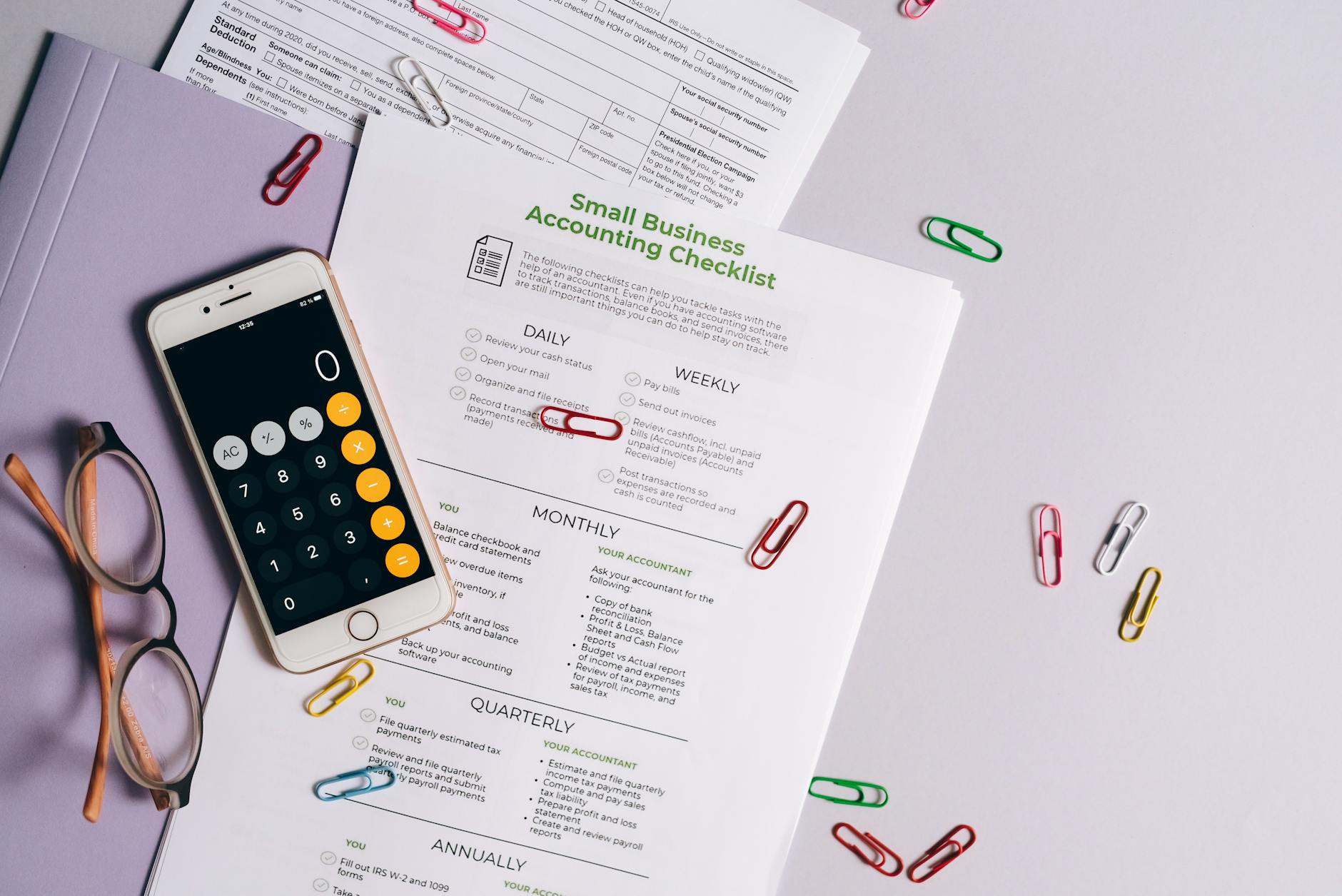
When you type "accountant for small businesses near me" into Google, you are not just looking for a bookkeeper. You are looking for someone who understands your business, your local market, and the specific tax rules that apply to you. A local accountant who can meet you in person, review your numbers, and help you plan ahead.
Online-only accountants have their place. But for most small business owners, the best option is a firm you can visit, talk to, and build a relationship with. Here is why that matters, and how to find the right one.
What Does "Accountant for Small Businesses Near Me" Actually Mean?
It means an accountant who works with businesses like yours: limited companies, sole traders, contractors, partnerships. Not a high-street tax return shop that only does self assessments. Not a large corporate firm that charges £500 an hour. A firm that specialises in small businesses and is based close enough that you can drop in.
At Holloway Davies, we are experienced specialist accountants and work with small businesses across the UK. But the principle applies wherever you are based. A local accountant understands the regional business landscape. They know which sectors are growing in your area. They can give advice that is grounded in your reality, not a generic template.
Why Local Beats Remote for Most Small Businesses
There are three main reasons a local accountant for small businesses near me beats a purely online service:
- Face-to-face meetings. You can sit down, spread your paperwork on the table, and talk through your numbers. That matters when you are dealing with something complex like IR35, director's loan accounts, or R&D claims.
- Local knowledge. A Manchester accountant knows about MediaCity contractors. A Birmingham accountant knows the Digbeth creative scene. A Bristol accountant understands the Harbourside tech startups. That context shapes the advice you get.
- Accountability. When your accountant is ten minutes away, they are not a faceless email address. You can hold them accountable. They know you might walk through the door next week.
Online firms often use junior staff to handle your day-to-day queries. A local firm puts a qualified accountant in front of you. That is a significant difference.
What to Look for in a Local Accountant for Small Businesses
Not every local accountant is the right fit. Here is what to check before you appoint one:
Qualification and Regulation
Look for ACCA or AAT qualification. Choosing a qualified, regulated accountant means the firm is insured and follows a strict code of ethics. We are specialist accountants at Holloway Davies, and that matters to our clients.
Experience with Your Business Type
A contractor needs different advice from a café owner. A limited company director has different obligations from a sole trader. Make sure the accountant you choose has a track record with businesses like yours. Ask them directly: "How many limited company clients do you have? Do you handle IR35 determinations? Have you filed R&D claims before?"
Software Compatibility
Most small businesses use Xero, QuickBooks, FreeAgent, or Sage. Your accountant should be proficient in your chosen software. At Holloway Davies, we work across all major platforms. If you are on Xero or FreeAgent, we can integrate directly with your records. That saves time and reduces errors.
Transparent Pricing
A good accountant for small businesses near me will give you a clear fee upfront. Not a vague "from £X per month" that balloons later. Ask for a fixed fee for your annual accounts, corporation tax return (CT600), and self assessment (SA100 or SA103 if you are a sole trader). Ask what is included and what costs extra.
What a Local Accountant Does for Your Small Business
Here is a realistic picture of the services you should expect:
- Annual accounts and corporation tax. Filing your CT600 and annual accounts to Companies House and HMRC. Deadlines are strict: 9 months after your year end for corporation tax payment, 9 months for filing accounts.
- Payroll and PAYE. If you have employees, including yourself as a director, your accountant should run payroll through software like BrightPay or Iris. They should handle P32, P60, P45, and P11D filings.
- VAT. If your turnover is near or above the £90,000 VAT registration threshold, your accountant should advise on whether to register voluntarily, and handle your VAT returns (VAT1, VAT484 if needed).
- Self assessment. For sole traders, partners, and directors with dividend income, your accountant should prepare and file your SA100 or SA800 (partnership return).
- Bookkeeping. Many accountants offer bookkeeping support. We recommend using cloud software like Xero or FreeAgent so your accountant can see your numbers in real time.
- Tax planning. This is where a local accountant adds real value. They can help you structure your director's salary and dividends efficiently, plan for BADR if you are selling, and manage your director's loan account to avoid S455 tax.
Check if and when MTD applies to you
Skip the spreadsheet. Tell us about your situation and a specialist will review your position and the next sensible step, with no obligation.
How to Find the Right Accountant for Small Businesses Near Me
Start with a search. But do not stop at the first three results. Look at their website. Read their blog. See if they write about topics relevant to you, like limited company tax, sole trader and self employment, or VAT and Making Tax Digital.
Check their location. If they are in your city, great. If they are a 90-minute drive away, that is not "near me".
Book a call. Most accountants offer a free initial consultation. Use it to ask the questions above. Gauge their expertise. Do they answer directly, or do they give vague generalisations? A good accountant will give you specific answers.
At Holloway Davies, we work with businesses across the UK. But we also have clients who choose us because they want a local firm they can visit. If that matters to you, we can arrange a meeting at our office or yours.
Common Mistakes When Choosing a Local Accountant
I see business owners make the same errors repeatedly. Here are the ones to avoid:
- Choosing based on price alone. The cheapest accountant is rarely the best. You get what you pay for. A £50-a-month service will not give you the same advice as a firm that charges £150 and puts a qualified accountant on your account.
- Ignoring qualification. Anyone can call themselves an accountant. Only qualified, regulated professionals can hold ACCA or AAT membership. Check their register.
- Not checking for specialisation. A general practice accountant might handle your tax return. But if you need R&D advice, IR35 support, or help with incorporation, you need someone who does that regularly.
- Assuming all accountants are the same. They are not. Some are brilliant with contractors but hopeless with ecommerce. Some specialise in property. Some focus on tech. Pick one that matches your sector.
What Does a Local Accountant Cost?
Fees vary by location and complexity. Here is a rough guide for a small limited company:
- Annual accounts and CT600: £600 to £1,500 per year.
- Payroll: £100 to £300 per year for a director-only payroll. More if you have multiple employees.
- VAT returns: £200 to £600 per year depending on frequency and complexity.
- Self assessment: £150 to £400 per return.
- Full bookkeeping service: £150 to £500 per month.
These are indicative. Always get a written quote before you commit. A good accountant for small businesses near me will give you a clear proposal with no hidden fees.
How to Prepare for Your First Meeting
When you find a local accountant you like, come prepared. Bring:
- Your last set of accounts (if you have them).
- A list of your income and expenses for the current year.
- Your company registration number and UTR (Unique Taxpayer Reference).
- Any HMRC correspondence you have received.
- A list of questions you want answered.
Your accountant will use this to give you a realistic picture of your tax position and what needs to happen next.
Final Thought
Searching for an "accountant for small businesses near me" is the right instinct. A local, qualified accountant who understands your business and your market is worth more than a cheap online service that treats you as a number. Take the time to find the right one. Your business will benefit from it.
If you would like to discuss your situation, get in touch. We are happy to talk through your options with no obligation.