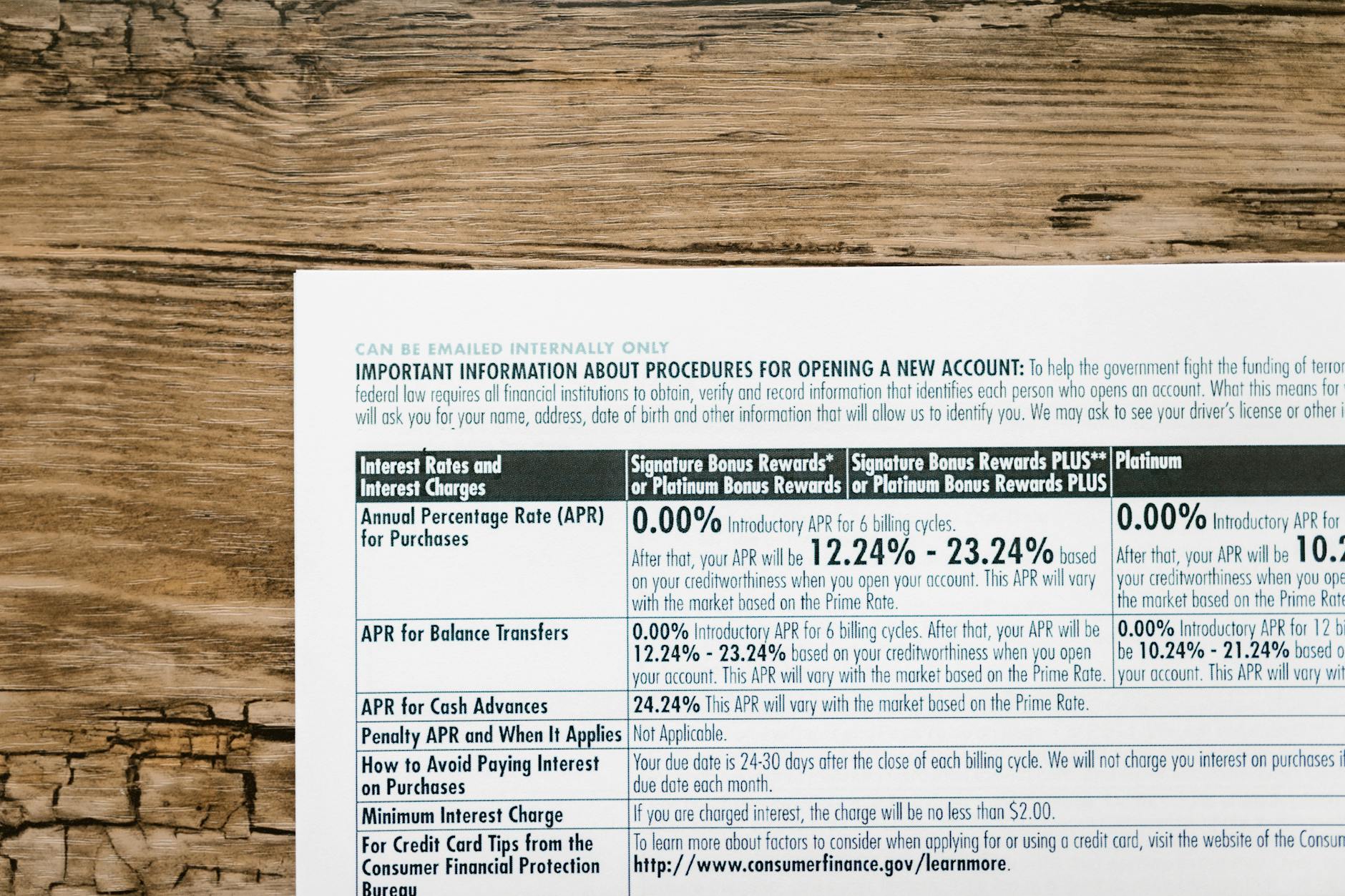
If you are a UK business owner deciding between flat rate VAT and standard VAT, the choice comes down to one question: does your business spend a meaningful amount on VAT-inclusive goods?
Flat rate VAT simplifies your paperwork and can put money in your pocket if your costs are low. Standard VAT lets you reclaim VAT on everything you buy, which works better for businesses with high overheads. The wrong choice costs you thousands. The right one saves time and tax.
This guide compares flat rate VAT vs standard VAT using real numbers, explains the limited cost trader trap, and helps you pick the right scheme for your business. We run these numbers for clients every week.
What Is Flat Rate VAT?
Flat rate VAT is a simplified scheme for businesses with a VAT-exclusive turnover below £150,000. You charge your customers the standard 20% VAT on invoices. But instead of working out exactly how much VAT you owe on each sale and how much you can reclaim on each purchase, you pay HMRC a fixed percentage of your gross turnover.
That fixed percentage depends on your business sector. A plumber doing labour-only work pays 14.5% of gross turnover (or 9.5% if materials are supplied). An IT consultant or data processor pays 14.5%. A builder pays 9.5%. You can find the full list on the GOV.UK flat rate scheme page.
The key advantage: you keep the difference between the 20% you charged your customer and the lower percentage you pay HMRC. If you are an IT consultant on the 14.5% flat rate, you keep 5.5% of every VAT-inclusive invoice as extra profit.
The key disadvantage: you cannot reclaim VAT on your purchases except for certain capital assets over £2,000. If your business spends heavily on supplies, equipment, or subcontractors, you lose that reclaim.
What Is Standard VAT Accounting?
Standard VAT accounting is the default scheme. You charge 20% VAT on your sales (output tax), and you reclaim the VAT on your purchases (input tax). You pay HMRC the net difference each quarter.
If you sell £10,000 plus VAT and buy £4,000 plus VAT, your net VAT payment is £1,200. You pay HMRC £2,000 on sales and reclaim £800 on purchases. Simple arithmetic.
Standard VAT gives you full control over your reclaims. It rewards businesses with significant costs. But it requires more detailed record keeping and a proper bookkeeping system like Xero, QuickBooks, or FreeAgent.
Flat Rate VAT vs Standard VAT: A Direct Comparison
Let us compare both schemes side by side using a real business example.
Example 1: A low-cost IT consultant in Manchester
Alex runs a software consultancy from a home office in the Northern Quarter. Turnover is £60,000 plus VAT. Costs are £8,000 plus VAT per year for software subscriptions, hosting, and a laptop every three years. No staff. No premises.
Under standard VAT:
- Output tax: £60,000 × 20% = £12,000
- Input tax: £8,000 × 20% = £1,600
- Net payment to HMRC: £10,400
- Profit retained from VAT: £1,600 (the input tax reclaimed)
Under flat rate VAT (IT consultancy sector at 14.5%):
- Gross turnover: £60,000 + £12,000 = £72,000
- Flat rate payment: £72,000 × 14.5% = £10,440
- Profit retained from VAT: £12,000 minus £10,440 = £1,560
On the 14.5% rate, Alex retains £1,560 under the flat rate versus £1,600 under standard VAT. Standard VAT saves £40 per year. There is also a limited cost trader issue: Alex's software subscriptions and hosting are services (excluded from the relevant goods test) and the laptop is a capital asset (also excluded). With no qualifying goods spend, Alex would be classified as a limited cost trader and required to use 16.5% instead. At 16.5%, the flat rate payment rises to £11,880 (£72,000 x 16.5%), leaving only £120 retained from VAT versus £1,600 under standard VAT. For a consultant profile like Alex, standard VAT is the right choice.
Example 2: A high-cost building contractor in Birmingham
BuildRight Ltd operates from a yard in Digbeth. Turnover is £180,000 plus VAT. Costs are £110,000 plus VAT for materials, subcontractors, plant hire, and van fuel.
Under standard VAT:
- Output tax: £180,000 × 20% = £36,000
- Input tax: £110,000 × 20% = £22,000
- Net payment to HMRC: £14,000
- Profit retained from VAT: £22,000 (the input tax reclaimed)
Under flat rate VAT (building sector at 9.5%):
- Gross turnover: £180,000 + £36,000 = £216,000
- Flat rate payment: £216,000 × 9.5% = £20,520
- Profit retained from VAT: £36,000 minus £20,520 = £15,480
BuildRight loses £6,520 per year on the flat rate scheme compared to standard VAT. That is because they spend heavily on materials and subcontractors where input tax reclaims add up fast.
The Limited Cost Trader Rule
This is the trap that catches many businesses. If your VAT-inclusive spending on relevant goods is less than 2% of your gross turnover (or less than £1,000 per year), HMRC classifies you as a limited cost trader.
Limited cost traders must use the 16.5% flat rate. That is the highest flat rate percentage available. It almost always makes the scheme worse than standard VAT.
Relevant goods include physical items you buy to resell or use directly in your services. They do not include food, drink, vehicle fuel, capital assets, or services like subcontractors, software subscriptions, or rent.
If you are a consultant, a freelancer, or a service-based business with low material costs, check your spending carefully. Many businesses that think they qualify for a low flat rate percentage are actually limited cost traders and must use 16.5%.
Using the wrong rate is an error. HMRC can assess back-dated VAT and charge penalties. If you are unsure about your status, speak to an accountant before filing.
When Flat Rate VAT Makes Sense
Flat rate VAT works best when your input VAT reclaims are low. Typical candidates include:
- IT consultants and software developers with minimal hardware costs
- Management consultants working from home
- Marketing and creative agencies with low material spend
- Accountants and solicitors with mostly salary costs
- Tradespeople who use the customer's materials
If your only significant costs are rent, salaries, software, and subcontractors, you are probably better off on the flat rate scheme. Those costs do not generate input VAT reclaims under standard accounting anyway.
Free VAT and Making Tax Digital tool
Compare VAT schemes and find the right one
Our interactive tool is designed for a larger screen. Leave your details and a specialist will send your figure and the next sensible step, with no obligation.
Compare VAT schemes and find the right one
Skip the spreadsheet. Tell us about your situation and a specialist will review your position and the next sensible step, with no obligation.
When Standard VAT Makes Sense
Standard VAT works better when your input VAT reclaims are substantial. Typical candidates include:
- Builders and contractors buying materials and plant hire
- Manufacturers buying raw materials
- Retailers and wholesalers buying stock
- Restaurants and cafés buying food and drink supplies
- Any business with significant capital expenditure plans
If you spend over £30,000 plus VAT per year on goods and services that carry VAT, run the numbers. Standard VAT almost always wins.
How to Switch Between Schemes
You can join the flat rate scheme at any time if your VAT-exclusive turnover is below £150,000. You apply using form VAT600 (FRS) or through your HMRC online account.
You must leave the flat rate scheme if your turnover exceeds £230,000 in the last 12 months. You can also leave voluntarily at any time. There is no minimum stay period.
If you leave the flat rate scheme, you must use standard VAT accounting from that point. You cannot rejoin the flat rate scheme for 12 months.
Switching is straightforward, but the timing matters. If you switch mid-quarter, you need to apportion your sales between schemes. Most businesses switch at the end of a VAT quarter to keep things clean.
Flat Rate VAT and Making Tax Digital
Both flat rate and standard VAT are fully compatible with Making Tax Digital (MTD) for VAT. You must use MTD-compatible software to file your VAT returns regardless of which scheme you use.
Xero, QuickBooks, and FreeAgent all support the flat rate scheme natively. They calculate your flat rate payment automatically based on your gross turnover and selected sector rate. You do not need to do the maths manually.
If you are on the flat rate scheme and also use the annual accounting scheme, you file one VAT return per year and make nine monthly payments. That combination is popular among sole traders and small limited companies.
Common Mistakes with Flat Rate VAT
We see the same errors repeatedly. Here are the ones to avoid:
Using the wrong sector rate. HMRC publishes a list of sector categories. Pick the one that matches your main business activity. If you do mixed work, use the category for your largest income stream.
Forgetting the 1% discount. If you are in your first year of VAT registration, you get a 1% discount on your flat rate percentage. That discount applies for 12 months from registration. After that, the standard rate applies.
Applying the flat rate to the wrong figure. The flat rate applies to your gross turnover including VAT. Some people mistakenly apply it to the net figure. That understates the payment and creates a compliance risk.
Not checking the limited cost trader test each year. Your spending patterns change. A year where you buy new equipment or stock might push you out of the limited cost trader category. Check every VAT quarter.
Should You Use the Flat Rate Scheme?
Run a quick calculation. Take your last 12 months of sales and costs. Work out what you would pay under both schemes. If the flat rate scheme saves you more than £500 per year and you are comfortable with the simpler record keeping, join it.
If the difference is small, consider the non-financial factors. Flat rate VAT is simpler. You do not need to track every purchase receipt for input VAT. You just apply your percentage to gross turnover and file.
But if you are a high-cost business, standard VAT is almost certainly better. The extra admin is worth the thousands you save in input tax reclaims.
For most service-based businesses with low overheads, the flat rate scheme is a genuine saving. For most product-based or material-heavy businesses, standard VAT wins.
If your business does not fit neatly into either category, book a call with our team. We will run the numbers for your specific situation and recommend the right scheme.