When a UK limited company needs new plant, machinery or equipment, paying cash out of reserves is rarely the sharpest move. Equipment finance lets your company spread the cost of the kit over its working life while the asset earns its keep from day one. Done well, it protects working capital, keeps your borrowing capacity free for other things, and can be paired with capital allowances so the tax relief lands exactly when you want it.
This is the business-wide guide to financing equipment and machinery. It covers the three ways to fund kit (hire purchase, finance lease and operating lease), why the new-or-used question changes the tax answer completely, how to release cash from machines you already own, and a worked comparison of buying an £80,000 line on hire purchase against leasing it. Sector-specific equipment pages, such as dental chair finance or construction plant, sit underneath this guide and link back up to it.
What equipment and machinery finance is
Equipment finance is asset finance applied to the productive kit a business runs on: production plant, machine tools, packaging and processing lines, commercial vehicles, catering and refrigeration units, IT hardware, medical and dental equipment, and more. Instead of paying the full price upfront, your company enters an agreement with a funder that either buys the asset and lets you pay for it over time, or owns the asset and rents it to you.
The appeal is straightforward. A £120,000 machine that generates revenue for the next seven years should be paid for out of the seven years of trading it enables, not out of a single quarter's cash. Equipment finance matches the cost to the benefit, keeps cash in the business for wages, stock and unexpected bills, and sits alongside your other facilities rather than consuming your overdraft or bank appetite. For the wider picture of how equipment finance fits with vehicles, refinance and the buy-versus-lease tax decision, this page is the equipment-specific companion to our asset finance guide.
Hire purchase vs finance lease vs operating lease for equipment
There are three core structures, and the right one turns on whether you want to own the asset and how you want the tax relief to fall.
Hire purchase (HP). Your company pays a deposit then fixed instalments, and owns the equipment outright at the end (often after a small option-to-purchase fee). Because HP is treated as buying the asset, your company can claim capital allowances, including full expensing or the annual investment allowance, in the year the kit is brought into use. HP suits equipment with a long working life that you intend to keep, and machinery where owning the asset outright matters.
Finance lease. The funder buys and owns the asset; your company rents it over a primary period covering most of its value, then pays a low secondary rental to keep using it or shares in the sale proceeds when it is eventually sold. You deduct the rentals against profit rather than claiming allowances, which spreads the tax relief across the term. It suits companies that want lower upfront cost and do not need to own the asset.
Operating lease and contract hire. A shorter-term rental where you use the equipment for a defined period and hand it back, with the funder carrying the residual-value risk. Rentals are deductible and the asset never sits on your balance sheet as owned kit. This suits equipment you replace frequently, or fast-moving technology where obsolescence is the real risk.
A quick rule of thumb: if you want to own it and keep it, lean HP; if you replace it often or want it off balance sheet, lean lease. The tax section below shows why HP plus full expensing is frequently the winner for main-rate plant.
New vs used equipment: why it changes the tax answer
This is the single most misunderstood point in equipment finance, and getting it wrong costs real money.
Full expensing (100% first-year relief on main-rate plant and machinery, companies only, permanent) and the new 40% first-year allowance available from 1 January 2026 both require the equipment to be new and unused. Buy a brand-new packaging line and the whole cost can attract 100% relief in year one. Buy the same line second-hand and neither of those reliefs is available.
Used equipment is not shut out of relief entirely. It can still go into the annual investment allowance (AIA), which gives 100% relief on up to £1,000,000 of qualifying spend a year regardless of whether the asset is new or used. Above the AIA limit, used main-rate kit only attracts writing-down allowances at 14% a year from April 2026 (reduced from 18%), so the relief drips out slowly over many years.
The practical upshot: for a company under the £1m AIA ceiling, new and used equipment both get full relief in year one, but through different routes. For a company spending above £1m, buying new unlocks unlimited full expensing while buying used leaves you on 14% a year for the excess. If you are choosing between a new and a used machine, factor the tax timing in, not just the sticker price. The mechanics of each allowance are set out in our tax guides on the annual investment allowance, full expensing, and the capital allowances rates for 2026/27.
The tax decision: full expensing vs lease rentals
How you finance equipment decides how the tax relief reaches you. This is the reason the buy-versus-lease question is really a tax question.
Buy on hire purchase. HP counts as buying the asset, so your company claims capital allowances on the full qualifying cost. New main-rate plant can use full expensing for 100% relief in year one; used plant uses the AIA. The finance charge (the interest built into the payments) is separately deductible over the term. You get the bulk of the relief upfront.
Lease it. The funder owns the asset, so your company cannot claim allowances. Instead you deduct the rentals against profit as you pay them, spreading the relief evenly across the lease term. There is no big year-one deduction, but no large capital outlay either.
Worked example: an £80,000 packaging line
A manufacturing company (a 25% corporation-tax payer) needs a new packaging line costing £80,000. Compare two routes.
| Route | Tax treatment | Year-one CT relief |
|---|---|---|
| Hire purchase, new asset, full expensing | 100% first-year deduction on the £80,000 in the year it is brought into use, plus the finance charge deductible over the term | £80,000 × 25% = £20,000 in year one |
| 4-year finance lease | Rentals of roughly £20,000 a year deducted as paid, spread across the term | About £20,000 of deductions × 25% = £5,000 a year |
Both routes ultimately relieve a similar total amount against tax, but the timing is very different. The HP route with full expensing pulls £20,000 of corporation-tax saving into year one, which is worth more in cash terms than the same relief drip-fed over four years. The lease keeps upfront cost lower and preserves the AIA and full-expensing headroom for other spending. If cash flow is tight and you have limited capital-allowances appetite this year, the lease can still be the better call. The point is to choose deliberately, not by default. These figures are illustrative; the exact numbers depend on your rate, your other capital spend and your accounting period.
Refinancing equipment you already own
If your company owns machinery outright, you are sitting on cash you can release without selling it. Asset refinance (sometimes called a sale and hire-purchase back, or capital release) works like this: a funder pays your company an agreed lump sum based on the current market value of the equipment, then you repay over a set term while carrying on using the kit exactly as before.
It is a useful way to fund growth, smooth a seasonal cash gap, or raise a deposit for a larger purchase, using assets that are already paid for rather than taking on an unsecured loan. Funders assess the equipment's current value and remaining useful life, so newer, mainstream, easily resaleable machinery raises more than older or specialist kit. If your cash-flow pressure is really about slow-paying customers rather than a need to own more equipment, invoice finance may fit better; our invoice finance for manufacturers guide covers that route.
Want this checked against your specific situation?
Leave your details and a one-line summary. A specialist will reply within 24 hours, with no obligation.
Soft assets vs hard assets
Funders split equipment into two camps, and it affects both whether a deal gets done and on what terms.
- Hard assets are durable machines with a strong second-hand market: CNC and machine tools, production plant, commercial vehicles, agricultural and construction machinery. They hold residual value, so funders lend against them readily, at keener rates, over longer terms and often with lower deposits.
- Soft assets have little or no resale value once installed: software, IT systems, security and CCTV, shopfitting and fit-outs, specialist tooling. They are still financeable, but usually on shorter terms, with larger deposits or a director's guarantee, because there is nothing worth much to recover if the deal fails.
Knowing which camp your equipment falls into sets your expectations before you apply, and explains why a £30,000 lathe and a £30,000 software rollout attract very different offers. You can sanity-check monthly costs and total repayable across different structures with our asset finance calculator before you speak to a funder.
Equipment finance by sector
Every trade has its own kit, its own working lives, and its own funders who understand that equipment. This guide is the business-wide canonical for equipment and machinery finance; the sector pages below go deeper on the specific assets, values and lenders for their trade, and link back up here for the general mechanics.
- Manufacturing and engineering: production lines, CNC machinery and heavy plant, where full expensing on new main-rate equipment is often the deciding factor. See our asset finance guide for the buy-versus-lease framework across all plant.
- Dental practices: chairs, imaging, CAD/CAM and surgery fit-outs are covered on the dedicated dental equipment and chair finance guide, which links back to this page for the general tax treatment.
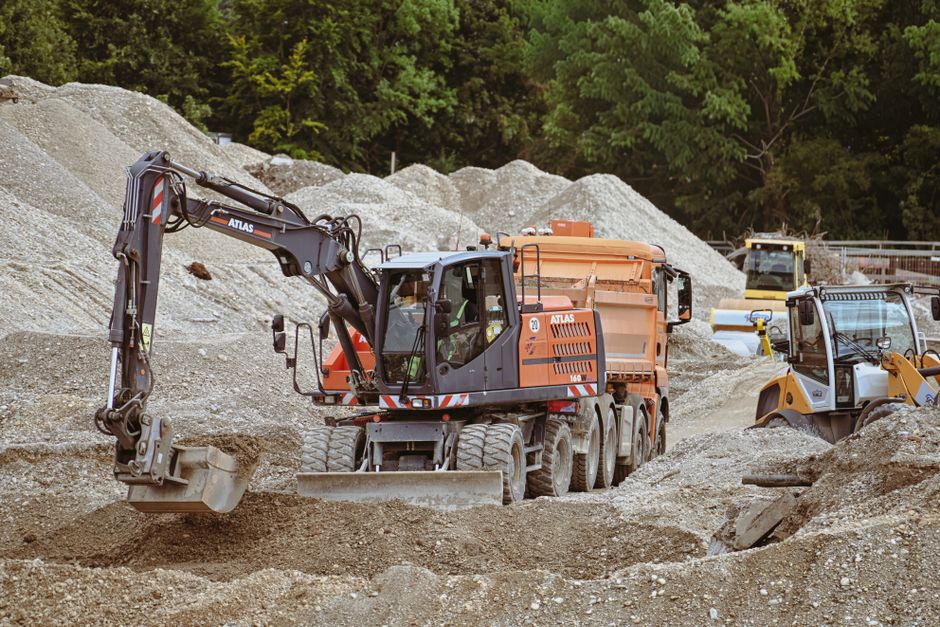
- Construction and groundworks: excavators, telehandlers and site plant, where operating lease and contract hire often suit fast-cycling fleets.
If your equipment is a specialist item, a broker panel that covers multiple asset funders will usually find a better fit than a single bank whose appetite may not stretch to your kind of kit.
Eligibility and how to apply
Funders assess your company's trading history, filed accounts, turnover, existing commitments and, for softer assets, sometimes a director's guarantee. Newer companies and higher-value or soft-asset deals attract more scrutiny, but asset finance is secured on the equipment itself, so it is often more accessible than unsecured borrowing of the same size.
To apply through our panel, tell us the equipment type and value, whether it is new or used, and your preferred structure (own it via HP or rent it via lease). We check the company-gate first (your business must be a UK limited company or LLP), then introduce you to commercial-finance brokers who compete for the deal across multiple funders. There is no cost to you for the introduction, and comparing several funders typically beats accepting the first bank quote.
Once you know the shape of the deal, a qualified accountant on our partner team can confirm the capital-allowances position, so full expensing, AIA or lease rentals all land the way you intend. To start, scroll to the enquiry form, confirm your business is a limited company, and give us the equipment details.
Authority and sources
The regulatory, funding and tax framework behind this guide draws on primary UK sources:
- Finance and Leasing Association (asset-finance standards and the Business Finance Code)
- British Business Bank business finance hub
- gov.uk: finance and support for your business
- HMRC Capital Allowances Manual (CA23000, plant and machinery)
- Financial Services and Markets Act 2000 (Regulated Activities) Order 2001 (the body-corporate framing that keeps company introductions outside the credit-broking perimeter)