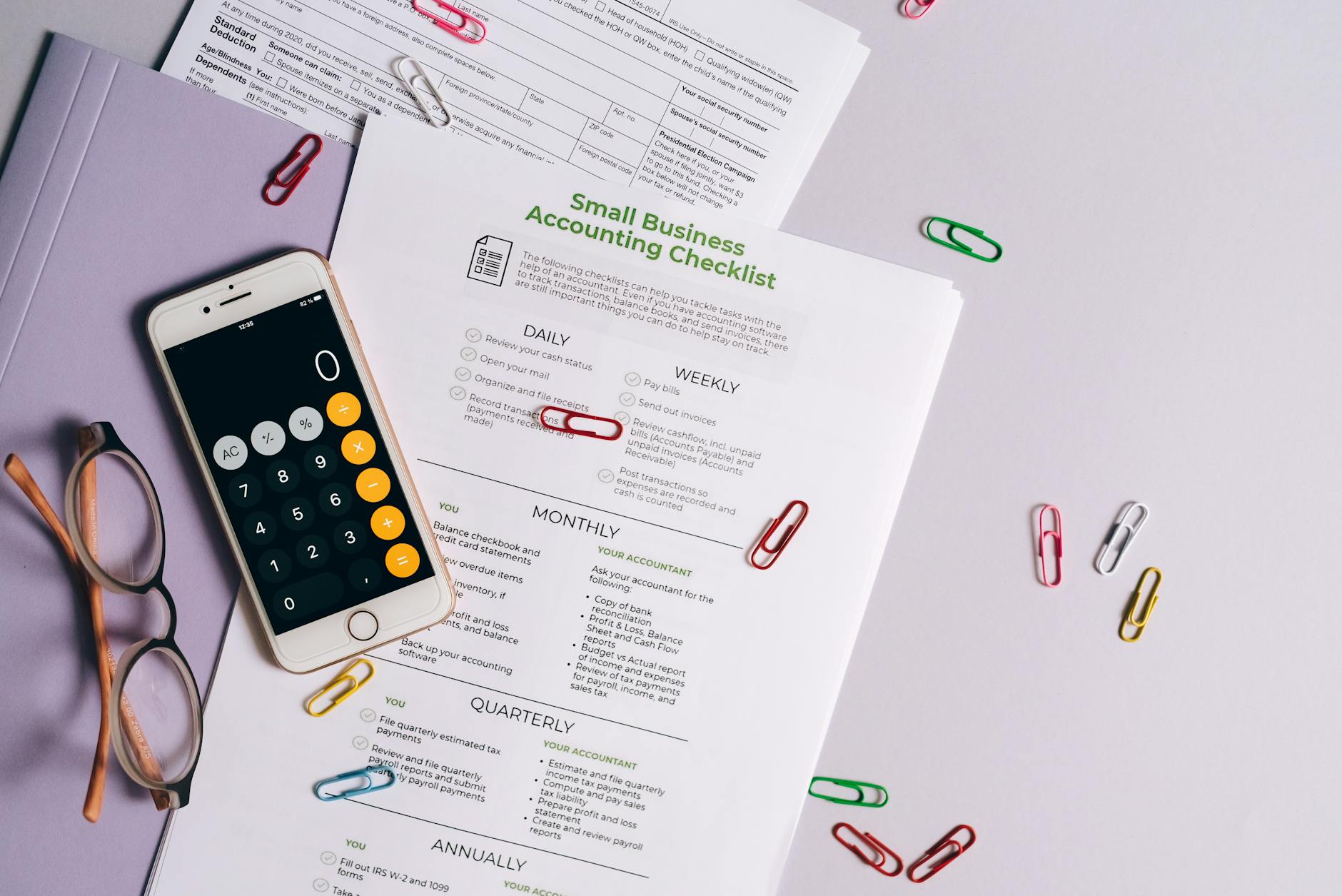
VAT is the tax UK business owners most often get wrong. Not because they are careless, but because the rules shift constantly, the deadlines are unforgiving, and the penalties for mistakes are now automatic under Making Tax Digital (MTD). Whether you are a limited company director in Shoreditch, a sole trader in the Jewellery Quarter in Birmingham, or a partnership operating from the Quayside in Newcastle, you need to understand how VAT affects your business, and when to bring in a VAT accountant.
This guide is written for UK business owners who want the full picture. We cover compulsory and voluntary registration, every VAT scheme HMRC offers, the real cost of getting it wrong, and how MTD changes everything from April 2026. We are specialist accountants who work with businesses of every shape across the UK. This is the page you will bookmark and come back to.
Do You Need a VAT Accountant?
The short answer: it depends on your turnover, your sector, and how complex your transactions are. But for most businesses, the question is not whether you need a VAT accountant, it is when.
The £90,000 Threshold and Compulsory Registration
If your VAT-taxable turnover in any rolling 12-month period exceeds £90,000, you must register for VAT. This is not a future projection. It is a real-time test. You check it at the end of every month. If you exceed the threshold, you have 30 days to notify HMRC using form VAT1.
Many business owners miss the rolling 12-month rule. They look at their last financial year and think they are safe. But if you had a strong quarter, say you are a software consultancy in the Northern Quarter in Manchester and landed a £95,000 contract in March, you are over the threshold immediately. You must register. Fail to do so, and HMRC can backdate the registration and charge you VAT on all the invoices you issued while you should have been registered.
Voluntary Registration: When It Makes Sense
You can register for VAT voluntarily even if your turnover is below £90,000. This is common for:
- Businesses that sell mainly to other VAT-registered businesses. Your clients can reclaim the VAT you charge, so it costs them nothing, and you can reclaim VAT on your own purchases.
- Startups making significant capital purchases. If you are buying £50,000 of equipment in your first year, voluntary registration lets you reclaim the £10,000 of input VAT.
- Businesses that want to appear more established. A VAT number signals credibility to larger clients.
The decision is not always straightforward. If you sell to the public (B2C), adding 20% to your prices makes you more expensive. A VAT accountant can model the numbers for your specific situation.
When You Definitely Need Professional Help
You can handle a simple, single-rate, B2B VAT return yourself using FreeAgent or Xero. But you should speak to a VAT accountant if any of the following apply:
- You sell goods or services that are zero-rated, exempt, or subject to reduced rates (5% fuel and power, for example).
- You import or export goods.
- You operate in the construction industry (CIS and VAT interact in complex ways).
- You have a mix of taxable and exempt supplies (partial exemption).
- You are buying or selling property.
- HMRC has opened a VAT inspection or compliance check.
- You want to use a specialist scheme like the Flat Rate Scheme or the Cash Accounting Scheme.
Each of these scenarios carries real financial risk. Get the VAT treatment wrong on a single property transaction, and you could be looking at a five-figure assessment plus penalties.
VAT Registration: The Process and the Pitfalls
Registration is straightforward on the surface. But the details matter.
How to Register for VAT
You register online through your Government Gateway account. HMRC will issue your VAT number within 30 working days, usually sooner. You will need:
- Your company registration number (if you are a limited company)
- Your Unique Taxpayer Reference (UTR)
- Your bank account details
- An estimate of your VAT-taxable turnover for the next 12 months
- The date you want your registration to take effect
You can choose your VAT accounting period, usually quarterly, but you can opt for monthly if you regularly reclaim VAT (common for exporters).
Effective Date of Registration
If you register voluntarily, you choose the effective date. If you register because you exceeded the threshold, the effective date is the first day of the month after you exceeded it, or an earlier date if you agree with HMRC.
Here is a worked example. ABC Consulting Ltd, based in Leeds city centre, has a rolling 12-month turnover of £87,000 at the end of January 2026. In February 2026, it invoices £25,000. Its rolling turnover is now £112,000. It must notify HMRC by 30 March 2026. The effective date of registration is 1 March 2026, meaning ABC must charge VAT on all invoices issued from 1 March onwards.
Group Registration and Associated Companies
If you control multiple limited companies, you may be able to register as a VAT group. This allows one company to submit a single VAT return for the group. It simplifies administration and can reduce the risk of missing transactions between group companies.
But there are traps. Group registration makes all members jointly and severally liable for the VAT debt. If one company fails, HMRC can pursue the others. You need to weigh the administrative savings against the risk. A VAT accountant experienced with multi-entity structures can advise on whether group registration is right for you.
VAT Schemes: Which One Is Right for Your Business?
HMRC offers several VAT schemes. Most businesses use the Standard Accounting Scheme. But depending on your cash flow, your customers, and your sector, one of the alternatives could save you time or money.
| Scheme | Best for | Key feature | VAT rate |
|---|---|---|---|
| Standard Accounting | Most businesses | Output VAT on invoice date, input VAT on invoice date | 20% (standard) |
| Cash Accounting | Businesses with slow-paying customers | Output VAT when you receive payment, input VAT when you pay | 20% |
| Flat Rate Scheme | Small businesses with low costs | Pay a fixed percentage of turnover, keep the difference | Varies by sector (4% to 14.5%) |
| Annual Accounting | Businesses that want fewer returns | One return per year, interim payments | 20% |
| Margin Scheme | Second-hand goods dealers | VAT on profit margin only | 20% on margin |
| Tour Operators Margin Scheme | Travel businesses | VAT on margin on package holidays | Varies |
Standard Accounting Scheme
This is the default. You account for VAT on the date you issue an invoice (output VAT) and the date you receive an invoice (input VAT). It works well if your customers pay promptly and you have a steady flow of purchases.
The risk: if your customers pay late, you still owe HMRC the VAT on those invoices. You are effectively financing HMRC. If you are a contractor in the Baltic Triangle in Liverpool working on 60-day payment terms, the Cash Accounting Scheme may be better.
Cash Accounting Scheme
Under this scheme, you only pay HMRC the VAT you have actually collected from your customers. You reclaim VAT on purchases only when you have paid your suppliers. This is a cash-flow benefit for businesses that wait 30, 60, or 90 days for payment.
You can use the Cash Accounting Scheme if your taxable turnover is £1.35 million or less. You must leave the scheme once your turnover exceeds £1.6 million.
Flat Rate Scheme
The Flat Rate Scheme simplifies VAT accounting. Instead of reclaiming input VAT on individual purchases, you pay a fixed percentage of your gross turnover to HMRC. The percentage depends on your sector. A limited company in the IT sector pays 14.5% (reduced to 13% in the first year). A sole trader in the catering sector pays 12%.
You keep the difference between the 20% you charge your customers and the flat rate you pay HMRC. But there is a catch. If you are a "limited cost trader", meaning your VAT-inclusive expenditure on goods is less than 2% of your turnover or less than £1,000 per year, you must use the 16.5% flat rate. This catches most service businesses. You cannot use the scheme at all if your turnover exceeds £150,000.
The Flat Rate Scheme is rarely the right choice for businesses with significant purchases. But for a sole trader with low overheads, it can be genuinely simpler. We recommend running the numbers with a VAT accountant before opting in.
Annual Accounting Scheme
This scheme lets you submit one VAT return per year. You make interim payments of 25% of your estimated annual liability in months 4, 7, and 10. The final balancing payment is due with your return.
It reduces paperwork. But it also means you are paying HMRC in advance of knowing your actual liability. If your turnover drops, you have overpaid. If it rises, you face a large balancing payment.
Making Tax Digital for VAT
Making Tax Digital (MTD) for VAT has been mandatory since April 2019 for businesses with turnover above the VAT threshold. From April 2022, it became mandatory for all VAT-registered businesses, regardless of turnover.
What MTD Means for Your Business
Under MTD, you must keep digital records and submit your VAT returns using MTD-compatible software. You cannot use the HMRC online portal to type in numbers manually. You need software that connects to HMRC's API.
Most cloud accounting platforms are MTD-compatible. Xero, QuickBooks, FreeAgent, Sage, and Crunch all support MTD for VAT. If you are using spreadsheets, you need bridging software, a tool that takes your spreadsheet data and submits it to HMRC.
Penalties Under MTD
HMRC introduced a new penalty system for VAT from January 2023. The old surcharge system is gone. Now, you face:
- A first late payment penalty of 2% of the VAT due, increasing to 4% if still unpaid after 15 days, then 4% per annum on the outstanding amount.
- A points-based penalty for late submissions. You get one point per late return. After reaching the threshold (4 points for quarterly filers, 5 for annual filers), you receive a £200 penalty. Each subsequent late return adds another £200.
Points expire after 24 months of compliant filing. But if you reach the threshold, you stay in the penalty regime until you have filed 12 consecutive months on time.
MTD for Income Tax (MTD ITSA)
From April 2026, Making Tax Digital extends to income tax for sole traders and partnerships with total income above £50,000. From April 2027, it applies to those with income above £30,000. From April 2028, it applies to those with income above £20,000.
This matters for VAT-registered sole traders. You will need software that handles both MTD for VAT and MTD for ITSA. Planning your software choices now will save you a headache later. Read our MTD guide for the full picture.
VAT Returns: What You Need to Submit and When
Most businesses submit VAT returns quarterly. You have one calendar month and seven days after the end of your VAT period to file and pay. If your period ends 31 March, your deadline is 7 May.
What Goes Into a VAT Return
A VAT return (form VAT100) captures:
- Total sales and other outputs (excluding VAT)
- Output VAT due on those sales
- Total purchases and other inputs (excluding VAT)
- Input VAT you can reclaim
- Net VAT payable or repayable
You must also report any corrections from previous periods, adjustments for partial exemption, and any VAT due on acquisitions from EU countries (post-Brexit rules apply).
Common Mistakes on VAT Returns
The most frequent errors we see:
- Claiming input VAT on entertaining clients (generally blocked)
- Claiming input VAT on cars used for private purposes (blocked unless the car is used exclusively for business)
- Failing to adjust for private use of business assets (mobile phones, fuel, accommodation)
- Incorrectly applying the VAT rate to mixed supplies (a consultancy that includes both standard-rated and exempt services)
- Missing the 4-year time limit for reclaiming input VAT
If HMRC discovers errors on your returns, you could face penalties of up to 30% of the underdeclared tax, depending on whether HMRC considers the error careless or deliberate.
Partial Exemption: The Most Complex Area of VAT
Partial exemption applies if your business makes both taxable and exempt supplies. A property company that charges rent on commercial property (exempt) and also provides consultancy services (standard-rated) is partially exempt.
The De Minimis Rules
If your exempt input VAT is below certain thresholds, you can reclaim all of your input VAT. The de minimis limits are:
- Exempt input VAT is £625 or less per month on average
- Exempt input VAT is no more than 50% of total input VAT
If you exceed these limits, you must apportion your input VAT between taxable and exempt supplies. You can only reclaim the portion relating to taxable supplies.
The Standard Method
The standard method apportions input VAT based on the value of taxable supplies as a percentage of total supplies. If 80% of your supplies are taxable, you reclaim 80% of your residual input VAT.
HMRC allows alternative methods if the standard method produces an unfair result. You can apply for a Partial Exemption Special Method. This is common for businesses with high-value exempt supplies and low-value taxable supplies.
Partial exemption is not a DIY area. Get it wrong, and HMRC can disallow your input VAT claims going back four years. A VAT accountant who specialises in partial exemption can save you significant money, and keep you compliant.
Free VAT and Making Tax Digital tool
Compare VAT schemes and find the right one
Our interactive tool is designed for a larger screen. Leave your details and a specialist will send your figure and the next sensible step, with no obligation.
Compare VAT schemes and find the right one
Skip the spreadsheet. Tell us about your situation and a specialist will review your position and the next sensible step, with no obligation.
VAT and Property: A High-Risk Area
Property transactions are one of the highest-risk areas for VAT errors. The rules depend on whether the property is commercial or residential, new or old, and whether you opt to tax.
New Residential Property
The sale of a new residential property (the first grant of a major interest) is zero-rated for VAT. Builders can reclaim input VAT on construction costs. But the rules around what counts as "new" and what counts as "residential" are detailed and unforgiving.
Commercial Property and the Option to Tax
Commercial property transactions are generally exempt from VAT. But you can elect to waive that exemption, known as opting to tax. This means you charge VAT on the rent or sale price, and you can reclaim VAT on your costs (including purchase price, refurbishment, and professional fees).
Opting to tax is irreversible for that property (with very limited exceptions). If your tenant is exempt (a bank, a charity, a school), they cannot reclaim the VAT you charge, making your property more expensive for them. You need to think carefully before opting to tax.
Property Development and VAT
If you develop property, you need to understand the DIY Housebuilders Scheme (for individuals building their own home) and the rules around converting commercial property to residential. The VAT treatment of conversions and renovations depends on whether the property has been empty for 2 years or more, and whether it is a change of use.
We strongly recommend specialist advice for any property transaction involving VAT. The cost of getting it wrong can easily exceed the fees you save by going it alone.
International VAT: Importing and Exporting
Brexit changed the VAT rules for trade with the EU. Businesses that trade internationally face additional compliance requirements.
Importing Goods into the UK
When you import goods from outside the UK, you must pay VAT at the point of entry. You can reclaim this VAT on your next return, provided you have the correct customs documentation. The process is handled through the Customs Declaration Service (CDS).
If you import goods regularly, you may be able to use Postponed VAT Accounting (PVA). This allows you to account for the import VAT on your VAT return rather than paying it at the border. It improves cash flow and reduces paperwork.
Exporting Goods from the UK
Exports of goods to customers outside the UK are zero-rated for VAT, provided you hold evidence of export. You need commercial invoices, packing lists, and proof that the goods left the UK (airway bills, bill of lading, or customs clearance documentation).
HMRC checks export evidence carefully. If you cannot produce it, your zero-rating is disallowed, and you owe 20% VAT on the sale.
Services to Overseas Clients
The VAT treatment of services depends on where your customer is based and what type of service you provide. The general rule is that B2B services are treated as supplied where the customer belongs. So if you are a marketing agency in Bristol's Harbourside providing services to a German company, you do not charge UK VAT. But you must check the place of supply rules for each specific service.
Digital services to EU consumers are subject to the One Stop Shop (OSS) scheme. You register for OSS in one EU member state and account for VAT at the rate applicable in your customer's country. This is complex and requires specialist software or a VAT accountant.
VAT Inspections and Compliance Checks
HMRC has the power to inspect your business premises and records at any time. VAT inspections are not random, HMRC targets businesses based on risk indicators.
What Triggers a VAT Inspection
Common triggers include:
- Repeated late returns or payments
- Large or unusual repayment claims
- Significant changes in turnover
- Operating in a high-risk sector (construction, property, retail)
- Errors identified on previous returns
- A tip-off from a competitor or disgruntled employee
How to Prepare for a VAT Inspection
If HMRC notifies you of a compliance check, you need to:
- Gather all VAT records for the period under review (invoices, receipts, bank statements, contracts)
- Ensure your digital records are complete and accurate
- Prepare a narrative of your business activities and how you account for VAT
- Identify any areas of potential dispute before HMRC does
You have the right to be represented by an accountant during a VAT inspection. We strongly recommend you exercise that right. HMRC officers are experienced investigators. They ask questions designed to uncover errors. A VAT accountant who knows the process can manage the interaction and protect your position.
The Outcome of a VAT Inspection
HMRC can:
- Agree your returns are correct (no further action)
- Assess additional VAT, plus interest and penalties
- Agree a repayment if you have overpaid
- Open a criminal investigation if they suspect fraud
Penalties for VAT errors range from 0% (if you took reasonable care) to 100% (for deliberate and concealed errors). The key is demonstrating that you took reasonable care. Using a qualified VAT accountant and following their advice is strong evidence of reasonable care.
VAT and Construction: The CIS Interaction
The construction industry faces some of the most complex VAT rules. If you are a builder, contractor, or subcontractor, you need to understand how VAT interacts with the Construction Industry Scheme (CIS).
VAT on Construction Services
Most construction services are standard-rated for VAT. But there are exceptions:
- New build residential properties are zero-rated for VAT (the builder can reclaim input VAT)
- Conversions of commercial property to residential are reduced-rated (5%) in some cases
- Renovations of properties that have been empty for 2 years or more are reduced-rated (5%)
- Approved alterations to listed buildings are zero-rated (subject to conditions)
The key distinction is between repairs and maintenance (standard-rated) and improvement works (which may qualify for reduced or zero rates). The line is not always clear. Installing a new boiler in a 3-year-old house is maintenance. Installing a new boiler as part of a full renovation of a property that has been empty for 3 years may qualify for the reduced rate.
The CIS and VAT Reverse Charge
From March 2021, the domestic VAT reverse charge applies to most construction services. This means the customer (the main contractor) accounts for the VAT on behalf of the subcontractor. The subcontractor issues an invoice with no VAT charged, and the main contractor declares both the output and input VAT on its return.
The reverse charge stops carousel fraud. But it creates significant administrative complexity. Subcontractors must clearly identify reverse charge supplies on their invoices. Main contractors must ensure their software can handle reverse charge accounting.
If you work in construction, you need a VAT accountant who understands both CIS and the reverse charge. The two interact in ways that can cause real cash-flow problems if not managed correctly.
Action Checklist: What to Do Now
Here is your practical action plan, whether you are already VAT-registered or approaching the threshold.
If You Are Not Yet VAT-Registered
- Monitor your rolling 12-month turnover every month. Set a reminder in your calendar.
- If you exceed £90,000, register within 30 days. Do not delay.
- Consider voluntary registration if you make significant purchases or sell mainly to VAT-registered businesses.
- Choose your VAT scheme carefully. Model the numbers for the Flat Rate Scheme, Cash Accounting, and Standard Accounting.
- Select MTD-compatible software now. Do not wait until you are registered.
If You Are Already VAT-Registered
- Review your VAT scheme. Is it still the best fit? Your business may have changed since you registered.
- Check your partial exemption calculations. If you have both taxable and exempt supplies, ensure you are using the correct method.
- Audit your input VAT claims. Are you claiming everything you are entitled to? Are you claiming anything you should not?
- Review your export evidence. Do you have documentation for every zero-rated export?
- Check your MTD compliance. Are you using approved software? Are your digital records complete?
- Consider a health check. A VAT accountant can review your last 4 years of returns and identify errors before HMRC does.
If HMRC Contacts You
- Do not respond alone. Instruct a VAT accountant to handle the correspondence.
- Do not agree to anything without understanding the implications.
- Do not destroy or alter any records.
- Do not miss deadlines. HMRC is less forgiving under the new penalty regime.
How We Can Help
We are specialist accountants based in the UK. We work with limited companies, sole traders, and partnerships across every sector. Our VAT services include:
- VAT registration (compulsory and voluntary)
- VAT return preparation and submission
- VAT scheme selection and optimisation
- Partial exemption calculations and special method applications
- Property VAT advice (option to tax, new build, conversions)
- International VAT (imports, exports, OSS)
- MTD compliance and software setup
- VAT inspection support and representation
- VAT health checks and error correction
We also handle the full range of UK tax compliance, corporation tax, income tax, payroll, CIS, and R&D tax credits. If you are a director drawing salary and dividends, we can optimise your overall tax position alongside your VAT planning. Visit our services page for the full list.
If you are approaching the VAT threshold, considering voluntary registration, or worried about a compliance check, speak to us. We will give you a clear, honest assessment of your position, and a fixed fee for the work required. Contact our team to arrange a call.
Every business is different. The information on this page is general guidance. You should speak to a qualified accountant about your specific circumstances before making any decisions that affect your VAT position.