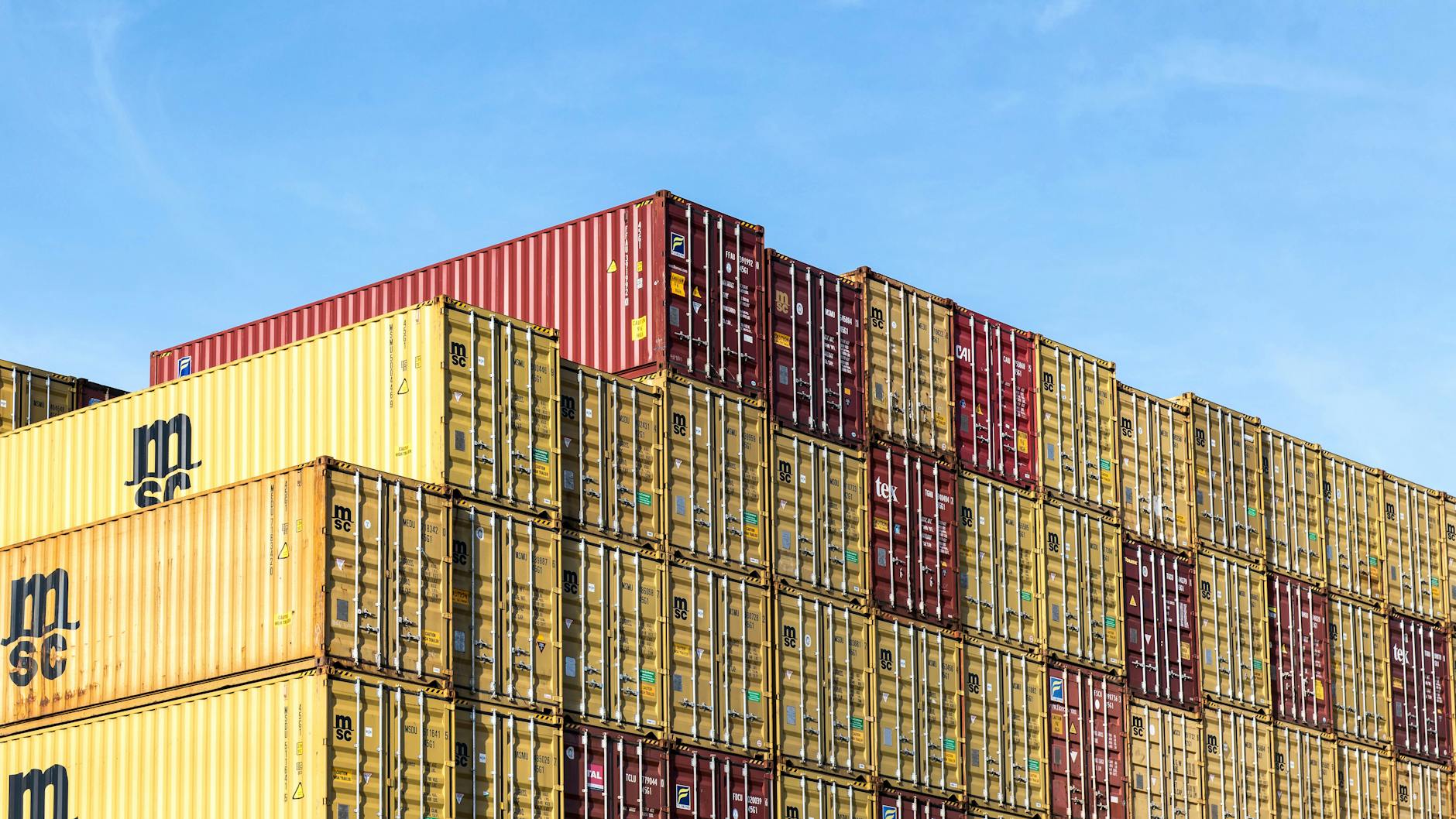
Importing Goods Triggers a Different Set of VAT Rules
If you bring goods into the UK from outside the country, the standard VAT rules you follow for domestic sales and purchases don't apply. Customs duties, import VAT, and the need for accurate customs declarations create a separate compliance layer. Get it wrong and you face delayed shipments, unexpected tax bills, or HMRC penalties.
This is where a specialist vat accountant becomes essential. Not just any accountant who files your quarterly return. One who understands the mechanics of postponed VAT accounting, customs valuation methods, and the specific HMRC forms that apply to importers.
At Holloway Davies, our experienced team works with businesses across the country who bring in goods from China, the EU, the US, and beyond. This article explains exactly what a VAT accountant does for an importing business and why the standard high street accountant may not be enough.
Postponed VAT Accounting: The Single Most Important Change for Importers
Before 1 January 2021, if you imported goods into the UK, you paid import VAT at the border (usually 20%) before your goods were released. You then reclaimed that VAT on your next return. That meant cash flow pressure. You paid HMRC weeks or months before you recovered the VAT.
Postponed VAT accounting (PVA) changed that. Under PVA, you do not pay import VAT at the border. Instead, you declare it on your VAT return as both output tax (what you owe) and input tax (what you reclaim). The net effect is zero cash flow impact. You account for the VAT without ever handing the money over.
A vat accountant ensures you are using PVA correctly. Many businesses still pay import VAT at the border unnecessarily because their customs agent or freight forwarder has not been instructed to use PVA. That costs cash flow. A good accountant flags this and makes sure your customs entries use the correct procedure code (40 00 001 for imports, 40 00 004 for removals from customs warehousing).
How PVA Affects Your VAT Return
When you use PVA, your VAT return shows the import VAT in box 1 (output tax due) and box 4 (VAT reclaimed). Box 7 shows the total value of imports. This is different from a standard purchase where the VAT sits in box 4 only. Your accountant must ensure these figures match the customs declaration data you hold.
You also need to access your monthly postponed VAT accounting statement from the HMRC online service. This statement shows the total import VAT you have accounted for each month. A vat accountant reconciles this statement against your customs entries to ensure everything ties up. Discrepancies happen. A missing statement or a mis-coded entry can mean you claim the wrong amount. Your accountant catches that before you file.
Customs Declarations and the C79 Certificate
If you do not use PVA, or if your goods arrive via a customs procedure that does not qualify (such as some special procedures), you will receive a C79 certificate from HMRC. This certificate shows the import VAT you paid at the border. You need this certificate as evidence to reclaim the VAT on your return.
Many importers lose C79 certificates. They arrive by post, get filed in the wrong place, or never reach the right person. Without the certificate, HMRC can refuse your input VAT claim. A vat accountant sets up a system to track and store these certificates. They also reconcile them against your customs entries to confirm you claim the correct amount.
For businesses using a customs agent or broker, the agent typically handles the customs declaration and sends you the C79. Your accountant checks that the agent has used the correct valuation method. Customs valuation is not simply the invoice price. It must include freight, insurance, and any commissions or royalties paid. An incorrect valuation means you overpay or underpay duty and VAT.
Customs Duty: Separate from VAT but Equally Important
Import VAT is not the only tax on imported goods. Customs duty applies to most goods from outside the UK (and from outside the EU for most goods). The duty rate depends on the commodity code, the country of origin, and the customs procedure used.
A vat accountant does not typically classify goods under commodity codes. That is a customs specialist or freight forwarder role. But your accountant does check that the duty paid is correctly accounted for in your books. Duty is not reclaimable as input VAT. It is a cost of goods sold. Getting this wrong on your VAT return or your corporation tax return means incorrect profit figures and potentially an HMRC enquiry.
Some businesses qualify for duty relief schemes. Inward processing relief allows you to import goods duty-free if you process them and re-export them. Outward processing relief works for goods exported for processing and re-imported. End-use relief applies to goods imported for a specific use, such as aircraft parts or medical devices. A vat accountant identifies whether any of these apply to your business and helps you apply.
VAT Registration Threshold and Importers
The UK VAT registration threshold is £90,000 in taxable turnover over a rolling 12-month period (the value of taxable supplies you make, not the value of goods you import). There is no separate import-value registration trigger under UK VAT law. In practice, most businesses that import goods for resale or use in taxable business activity will find that their sales revenue approaches the £90,000 threshold well before their import spend does, but it is turnover that triggers the obligation, not import values.
A vat accountant monitors your taxable turnover and flags when you approach the £90,000 threshold. They also handle the registration application using form VAT1 and ensure you register within the 30-day window once the threshold is breached. Late registration carries penalties. And if you are importing without being registered, you cannot reclaim the import VAT you paid at the border. That is a direct cost to your business.
Free VAT and Making Tax Digital tool
Compare VAT schemes and find the right one
Our interactive tool is designed for a larger screen. Leave your details and a specialist will send your figure and the next sensible step, with no obligation.
Compare VAT schemes and find the right one
Skip the spreadsheet. Tell us about your situation and a specialist will review your position and the next sensible step, with no obligation.
Importing from the EU vs. Rest of World
Since Brexit, imports from the EU are treated the same as imports from anywhere else. There is no special treatment. You still need a customs declaration. You still use PVA if you choose. You still pay customs duty (unless the goods qualify for zero duty under the UK-EU Trade and Cooperation Agreement).
Many businesses that previously bought from EU suppliers without any customs paperwork now face the same rules as those importing from China or the US. A vat accountant helps you adapt your processes. They check that your supplier invoices show the correct VAT treatment. If an EU supplier charges you VAT incorrectly (because they do not understand UK rules), you may need to adjust your return.
Record Keeping for Importers
HMRC expects importers to keep detailed records. You must hold evidence of the customs declaration (the C88 form or the electronic equivalent), the C79 certificate (if not using PVA), the postponed VAT accounting statement, the commercial invoice, the packing list, and proof of payment. These records must be kept for at least six years.
Your vat accountant sets up a filing system that works. This might be a digital folder in your accounting software (Xero, FreeAgent, or QuickBooks) or a physical file if you prefer paper. The key is that you can produce the evidence within a reasonable time if HMRC asks. An accountant who understands importers will build this into your bookkeeping process, not treat it as an afterthought.
When to Involve a VAT Accountant
If you are already importing goods and handling VAT yourself, the first sign of trouble is usually a delayed shipment or a letter from HMRC. Do not wait for that. Involve a vat accountant at the planning stage, before you place your first order from an overseas supplier.
If your business has grown and you now import regularly, your existing accountant may not have import experience. Ask them directly: do you handle postponed VAT accounting? Do you reconcile C79 certificates? Do you know the customs valuation rules? If they hesitate, find a specialist.
At Holloway Davies, we work with importers across Manchester, Birmingham, Bristol, and London. We see the same issues repeatedly: missed C79 certificates, incorrect PVA application, and failure to register for VAT once taxable turnover crosses the £90,000 threshold. These are all fixable. But fixing them after the fact costs time and money.
Practical Steps for Your Business
If you import goods from outside the UK, here is what to do today:
- Check whether you use postponed VAT accounting. If not, instruct your customs agent to switch to procedure code 40 00 001.
- Access your monthly postponed VAT accounting statement from the HMRC online service. Reconcile it against your customs entries.
- If you pay import VAT at the border, collect every C79 certificate. Store them in a single file. Reconcile them against your customs entries before your VAT return.
- Check your taxable turnover against the £90,000 threshold. If you are close, register for VAT now. Do not wait until you cross it.
- Speak to a vat accountant who understands importers. Ask about their experience with PVA, customs valuation, and duty relief schemes.
Importing goods is a growth strategy for many UK businesses. The VAT and customs rules should not hold you back. With the right accountant, they become a manageable part of your compliance, not a source of stress.
If you want to discuss your specific situation, contact our team. We work with importers across every sector, from ecommerce retailers in Shoreditch to manufacturing businesses in the Jewellery Quarter.