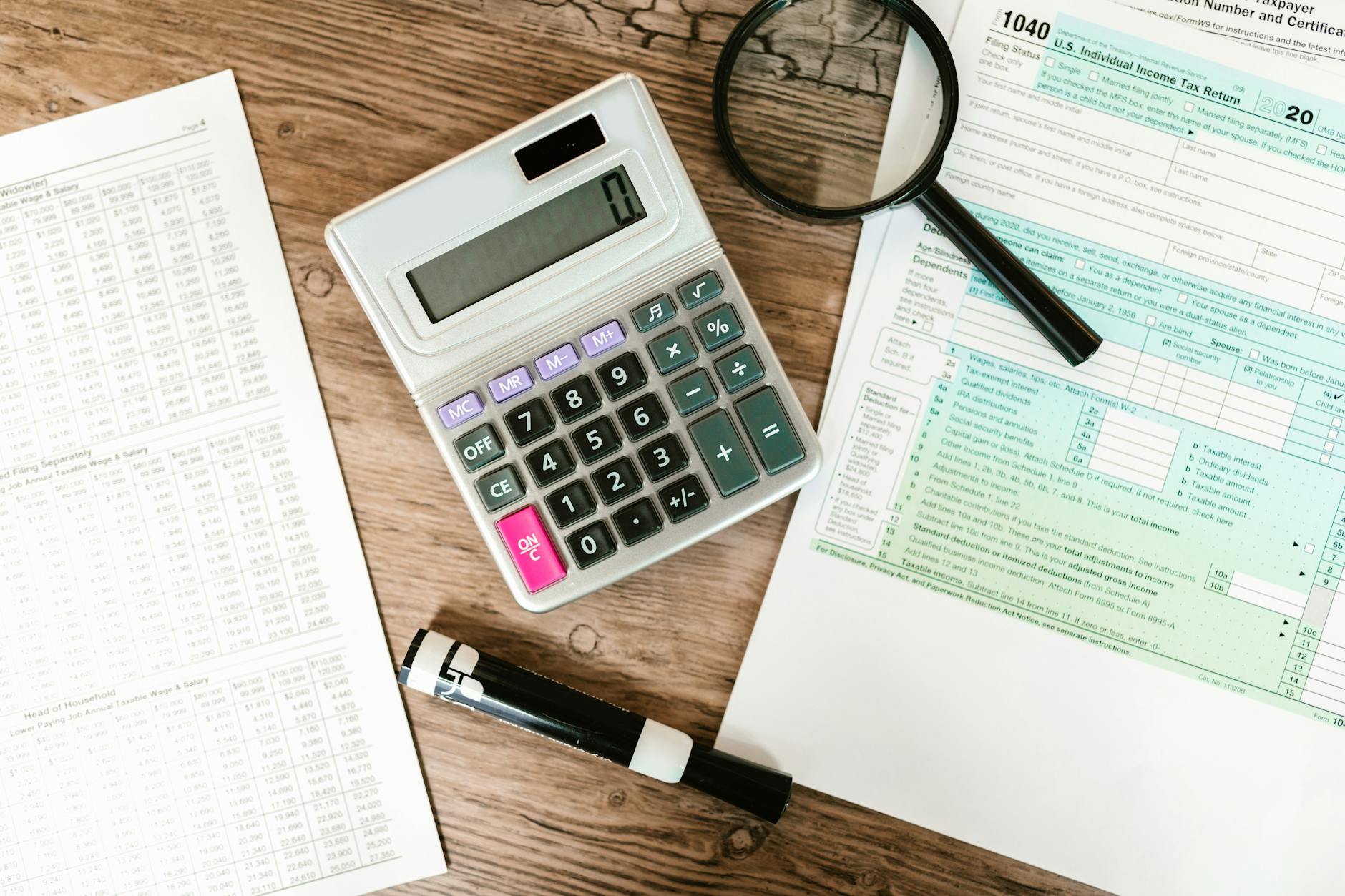
If you are searching for a self assessment tax return accountant near me, you are likely facing a deadline, a complex return, or a growing business that has outgrown DIY filing. You are not alone. Over 12 million people file a self assessment return each year in the UK, and a growing number use an accountant to handle it.
The question is not whether you can file it yourself. You can. HMRC's online system is straightforward for a single employment or a basic sole trader return. The question is whether DIY filing costs you more in missed reliefs, errors, or penalties than an accountant charges. For most business owners, the answer is clear.
This guide explains what a self assessment accountant does, what you should look for when searching locally, what it typically costs, and how to avoid the most common filing mistakes that trigger HMRC enquiries.
What Does a Self Assessment Tax Return Accountant Actually Do?
A self assessment tax return is not just about entering numbers into boxes. An accountant reviews your financial position, identifies every relief and allowance you qualify for, and ensures the return is accurate and complete before submission.
For a sole trader or freelancer, that means checking you have claimed the correct capital allowances, the trading allowance if applicable, allowable expenses specific to your trade, and that your profit calculation is on the right basis (cash or accrual). For a limited company director who also has self employment income, it means coordinating the SA100 (self assessment return) with the company's CT600 (corporation tax return) to avoid double counting or missed deductions.
For landlords, it means getting the mortgage interest restriction right, claiming replacement domestic items relief correctly, and understanding that the furnished holiday lettings regime was abolished from 6 April 2025, so all UK lettings now fall under standard residential property income rules. Each of these areas has traps that cost real money if you get them wrong.
An accountant also handles the administrative side: registering you for self assessment if you are new, filing the SA100 and supplementary pages (SA103 for self employment, SA105 for property), and calculating your payments on account. They will tell you exactly what to pay and when, not leave you to work it out from HMRC's calculation.
Why "Near Me" Matters for Self Assessment Accountants
You might wonder why location matters when most tax work is done remotely. It matters for three reasons.
First, local knowledge. An accountant in Manchester's Northern Quarter will know the specific expense patterns of digital agencies and creative freelancers in that area. One in Bristol's Harbourside will be familiar with the mix of tech contractors, hospitality businesses, and creative sole traders typical to the city. An accountant in the Jewellery Quarter in Birmingham will understand the cash flow and stock challenges of a small manufacturing business. That local context shapes the advice they give.
Second, face-to-face meetings. Some clients prefer to sit down with their accountant once a year, spread paperwork across a desk, and talk through the numbers. That is harder to do with a firm based 200 miles away. If you value that in-person relationship, a local accountant is the right choice.
Third, referral networks. A local accountant will know the other professionals you need: solicitors, mortgage brokers, financial advisers, bookkeepers. If you need a recommendation for a commercial mortgage or a partnership agreement, your accountant can give you a name within their local network.
That said, many of our clients at Holloway Davies never visit our office. We work remotely across the UK, using Xero, FreeAgent, and secure portals to share documents. If you prefer remote working, that is fine. The key is finding an accountant who communicates the way you want, whether that is email, phone, video call, or in person.
What to Look for in a Self Assessment Tax Return Accountant
Not all accountants are the same. Here is what to check before you appoint one.
Qualification
Look for a recognised qualification: ACCA, AAT, or CIMA. Our team at Holloway Davies work to high professional standards and carry professional indemnity insurance. An unqualified preparer might be cheaper, but you have no recourse if they make a mistake that costs you in penalties or interest.
Experience with Your Type of Work
Ask whether they regularly handle returns for your specific situation. A contractor inside IR35 has very different filing needs to a freelance graphic designer or a landlord with five properties. If you are a limited company director taking a mix of salary and dividends, the accountant needs to understand the interaction between your company's CT600 and your personal SA100. If you have overseas income or capital gains, that adds another layer.
Transparent Pricing
A good accountant will tell you upfront what a self assessment return costs. For a straightforward sole trader return with one source of income, expect £150 to £350 plus VAT. For a limited company director with multiple income streams, property, or investments, expect £300 to £600 plus VAT. If the quote is significantly lower than that, ask what is included. Some firms charge extra for HMRC correspondence, for filing the return late, or for each supplementary page.
Deadline Awareness
The online filing deadline for self assessment is 31 January each year. The paper deadline is 31 October. A good accountant will have your return ready well before the deadline, not on the morning of 31 January. Ask when they typically submit returns for their clients. If they say "most go in during January", that is a red flag.
How Much Does a Self Assessment Accountant Cost?
Here are typical fee ranges for self assessment work in 2025/26. These are estimates and will vary by location, complexity, and the accountant's experience.
- Sole trader, single trade, basic expenses: £150 to £250 plus VAT
- Sole trader with property income or capital gains: £250 to £400 plus VAT
- Limited company director (salary and dividends only): £300 to £500 plus VAT
- Contractor with IR35 determination and multiple contracts: £400 to £600 plus VAT
- Partnership return (SA800): £350 to £700 plus VAT
- Late filing or HMRC enquiry work: charged separately, typically £100 to £300 per hour
Some accountants offer a fixed fee for the year that includes the self assessment return, bookkeeping, and the company accounts. That is often better value than paying for each item separately. At Holloway Davies, we structure our services to cover the full picture, not just the tax return in isolation.
Common Self Assessment Mistakes That Cost Money
Even if you decide to file yourself, know the most common errors so you can avoid them. If you use an accountant, they will catch these for you.
Missing the deadline. The 31 January deadline is fixed. File even one day late and the penalty is £100. After three months, it rises to £10 per day up to £900. After six months, it is £300 or 5% of the tax due, whichever is higher. After twelve months, another 5% or £300. These penalties add up fast. If you cannot file on time, file a return with estimated figures. That stops the late filing penalty, though you will pay interest on any underpayment.
Forgetting payments on account. If your tax bill is over £1,000 and less than 80% of your prior year tax was collected at source through PAYE, HMRC expects you to pay half of the following year's estimated bill on 31 January and the other half on 31 July. Many first-time filers are caught out by this. Your accountant will calculate this for you and tell you the exact amounts.
Claiming the wrong expenses. You can claim expenses that are "wholly and exclusively" for your business. That does not mean everything you buy. A new laptop used 60% for business and 40% for personal use means you claim 60% of the cost. A £50 client lunch is allowable. A £200 dinner with friends is not. HMRC looks closely at expense claims, especially for sole traders and contractors.
Missing the marriage allowance. If your spouse or civil partner earns under £12,570 and you earn between £12,571 and £50,270, you can transfer 10% of their personal allowance to you. That saves up to £252 in tax. Many couples miss this.
Not registering for self assessment in time. If you started self employment in the 2024/25 tax year, you must register by 5 October 2025. Miss that and you face a penalty. The registration is done online through HMRC's portal.
Free Sole trader and self-employment tool
Calculate your take-home pay as a sole trader
Our interactive tool is designed for a larger screen. Leave your details and a specialist will send your figure and the next sensible step, with no obligation.
Calculate your take-home pay as a sole trader
Skip the spreadsheet. Tell us about your situation and a specialist will review your position and the next sensible step, with no obligation.
When Should You Use an Accountant vs Filing Yourself?
Here is a simple test. If you answer yes to any of the following, you should use an accountant.
- You have more than one source of income (e.g. self employment, property, dividends, capital gains)
- You are a limited company director with a personal return to file
- You have overseas income or assets
- You are unsure which expenses are allowable
- You have missed a deadline before and want to avoid penalties
- Your tax bill is over £5,000 and you want to plan how to pay it
- You want to minimise your tax bill legally, not just file a return
If your return is a single source of employment income with no complications, you can probably file yourself using HMRC's free online service. But even then, an accountant will check you are on the right tax code and claiming any reliefs you qualify for, like the marriage allowance or professional subscriptions.
How to Find a Self Assessment Tax Return Accountant Near Me
Start with a search for self assessment tax return accountant near me. Look at the first page of results. Check their qualifications, read their reviews on Google and Trustpilot, and look at their website for evidence of experience with your type of work.
Ask for recommendations from other business owners in your network. A personal referral from someone in a similar trade is often the best way to find a good accountant.
Contact two or three firms. Ask them about their experience with your situation, their fees, and how they communicate. A good accountant will ask you questions about your business, not just send a quote. They should want to understand your circumstances before pricing the work.
If you are in or near any of the following areas, we may be able to help. We work with clients across the UK, including London (Shoreditch, Soho, Canary Wharf, Camden), Manchester (Northern Quarter, MediaCity), Birmingham (Digbeth, Jewellery Quarter), Leeds (city centre, Leeds Dock), Bristol (Harbourside, Stokes Croft), Glasgow (Merchant City), Edinburgh (Leith, Old Town), Liverpool (Baltic Triangle), Sheffield (Kelham Island), and Newcastle (Quayside). You can find more about our locations on our site.
What Happens After You Appoint an Accountant
Once you appoint an accountant, the process is straightforward.
You will provide your documents: your P60 or P45 if you have employment income, your business income and expense records (bank statements, receipts, invoices), details of any property income, and any other income sources. Your accountant will use these to prepare your return.
They will review the return with you before submission. Check it carefully. Ask questions about anything you do not understand. Once you are satisfied, they will file it electronically through HMRC's system.
They will then tell you what you owe and when. If you need to make payments on account, they will explain how those work and when they are due. If you cannot pay the full amount on time, they can advise on HMRC's Time to Pay arrangements, which allow you to spread the bill over up to 12 months.
After filing, keep your records for at least 5 years after the 31 January filing deadline if you are self-employed or in a partnership (22 months applies only to non-trading individuals such as employees with no business income). HMRC can open an enquiry into your return up to 12 months after the filing deadline, and they may ask to see your supporting documents.
What About Making Tax Digital for Self Assessment?
From April 2026, Making Tax Digital (MTD) for Income Tax Self Assessment becomes mandatory for self employed individuals and landlords with qualifying income over £50,000. From April 2027, it extends to those with income over £30,000. From April 2028, it applies to those with income over £20,000.
MTD for ITSA means you will need to keep digital records and submit quarterly updates to HMRC using compatible software. A final end-of-year submission will then replace the current self assessment return for most people.
If you use an accountant who is already MTD compliant, the transition will be smoother. We help our clients prepare for MTD now, even if they are not yet within the threshold. The habit of quarterly reporting is worth developing early. You can read more about this in our VAT and Making Tax Digital blog posts.
Final Thoughts
Searching for a self assessment tax return accountant near me is a sensible step if your tax affairs are anything beyond the simplest return. The cost of an accountant is usually far less than the cost of a mistake, a penalty, or a missed relief.
If your turnover crossed the VAT threshold in the last 30 days, register inside the 30-day window. If you missed the 31 January self assessment deadline, file immediately to stop the daily penalties. If you are unsure whether you need to file a return at all, check HMRC's online tool or ask an accountant.
We are happy to discuss your situation. Contact our team for a no obligation chat about your self assessment filing. We will tell you honestly whether you need us or can handle it yourself.