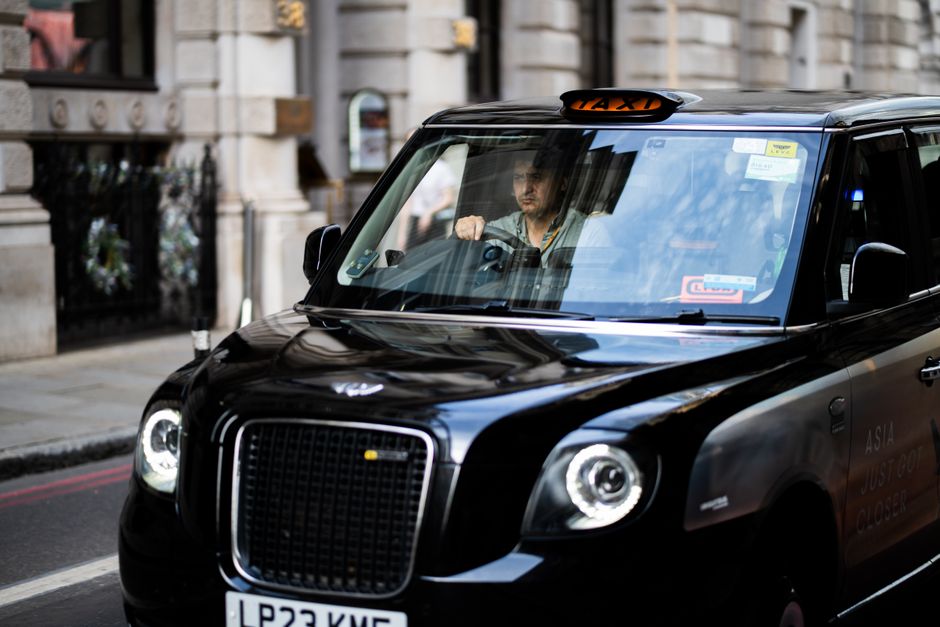
Hiring an accountant for taxi drivers buys you four specific pieces of work, not a vague sense of safety. Keeping your taxi accounts for the year to 5 April. Filing the Self Assessment return and telling you the number to pay. Getting your vehicle claimed the right way and keeping it that way. And keeping your tax record clean enough that the HMRC check on your licence renewal is a five minute job instead of a problem. If you drive a hackney carriage, a private hire vehicle (PHV) or a mix of circuit work and app work, those four jobs are the whole service. Everything else a firm sells you sits on top.
The detail sits on three other pages. The full Self Assessment walkthrough, expenses list and Making Tax Digital timetable sit on our self-employed taxi driver tax page. VAT on fares has its own page. Platform-specific questions about app driving are on the Uber drivers page.
The licence renewal tax check, done properly
This is the part most drivers get wrong, and it is the clearest reason a driver ends up wanting a specialist. Since tax conditionality came in under Finance Act 2021 Schedule 33, you cannot renew a taxi driver, private hire driver or PHV operator licence without completing an HMRC tax check first.
The dates matter. It applies to renewals in England and Wales from 4 April 2022, and in Scotland and Northern Ireland from 2 October 2023. It also catches a re-application where your licence has lapsed for a year or more. A genuine first-time applicant does not do the check; you only confirm you have read HMRC's guidance on your tax responsibilities.
How it works in practice. You log into your HMRC online account, answer a short set of questions about how you pay tax on your driving income, and HMRC gives you a tax check code. You hand that code to the licensing authority with your renewal. The authority verifies it and cannot process the renewal until it does.
Two details save people trouble. First, the code is valid for 120 days, so doing it six months early wastes it and you start again. Second, the council sees only a pass or a fail. It does not see your income, your return or what you owe. The check confirms you are registered for tax on your driving, nothing more.
What it means for the accounting job: your registration and filing position needs to be tidy before renewal season, not during it. A driver who has never registered discovers it at the worst possible moment.
Keeping taxi accounts: what the year actually looks like
Your taxi accounts are simply your takings minus your allowable costs, worked out for the tax year ending 5 April. Takings are gross fares, including tips paid through a card machine or app, before the circuit or platform takes its cut. Those cuts are then costs, not invisible.
The record set a good accountant asks for is short: daily or weekly takings, circuit and platform statements, fuel and charging receipts, insurance and licence documents, repair and tyre invoices, and a mileage log split between business and private miles. The mileage log is the one drivers skip and the one that decides the biggest number on the return.
Once your gross takings pass £1,000 in a tax year, you must register for Self Assessment by the 5 October after that tax year ends. Below £1,000 the trading allowance covers you. Nobody driving full time is anywhere near that line, but a driver picking up weekend shifts alongside a job often is.
Your vehicle: the choice that sets your tax bill
This is where accounting for taxi drivers earns its fee. You have two methods for vehicle costs, and you pick one per vehicle.
Simplified mileage rates. You claim a flat rate per business mile and claim nothing separately for fuel, servicing, insurance or depreciation. These are the Approved Mileage Allowance Payment (AMAP) rates. From 6 April 2026 the rate is 55p for the first 10,000 business miles in the tax year and 25p for every mile after that, up from 45p and 25p which applied to 2025/26 and earlier.
Actual costs plus capital allowances. You add up the real running costs, apportion out private use, and claim tax relief on the vehicle itself through capital allowances. Cars get writing-down allowances by CO2 emissions rather than the Annual Investment Allowance, so relief on a car arrives over years rather than in one go.
The rule people fall foul of: you must pick one method and stick with it for that vehicle, for as long as you use that vehicle in the business. Claim mileage rates on your current car and you cannot later swap to actual costs and capital allowances for it. Claim capital allowances first and mileage rates are shut off for that car. Change the vehicle and you get a fresh choice.
A worked comparison for 2026/27
Take a driver we will call Roshan, working a mix of circuit and app jobs, 18,000 business miles in the tax year to 5 April 2027.
On the mileage method: 10,000 miles at 55p is £5,500. The remaining 8,000 miles at 25p is £2,000. His deduction is £7,500. If his profit sits in the basic-rate band, that £7,500 saves 20% income tax plus the 6% Class 4 main rate set for 2025/26, still current when this page was checked in August 2026, which is 26% together, or £1,950.
Actual costs beat that only if his real fuel, insurance, servicing, tyres and capital allowances on the car, after taking out private mileage, come to more than £7,500 for the year. On a high-mileage older diesel that is common. On a nearly new electric vehicle it often is not. The point is that this is arithmetic you do once, before you claim anything on a new vehicle, because the answer locks in.
Filing, paying and the move to quarterly updates
You file one Self Assessment return a year, online by 31 January after the tax year ends, and pay the balance the same day. If your bill passes £1,000 you also start making payments on account on 31 January and 31 July. Making Tax Digital for Income Tax (MTD, the shift from one annual return to quarterly digital updates) then phases in by income level from 6 April 2026. Registering, filing, the expenses list and the MTD dates are set out step by step on our taxi driver Self Assessment, expenses and MTD page.
Free Sole trader and self-employment tool
Calculate your take-home pay as a sole trader
Our interactive tool is designed for a larger screen. Leave your details and a specialist will send your figure and the next sensible step, with no obligation.
Calculate your take-home pay as a sole trader
Skip the spreadsheet. Tell us about your situation and a specialist will review your position and the next sensible step, with no obligation.
Do you charge VAT on fares?
Taxi and private hire fares are standard rated, but as an individual driver you only have to register for VAT once your taxable turnover passes £90,000 in any rolling 12 months. Very few single drivers reach that, so most charge no VAT at all. Where it gets genuinely complicated is at operator level, because whether the operator contracts as principal or as your agent changes who is supplying the passenger and what VAT is due on the full fare. That question went through the courts and the position is date sensitive. Our page on VAT and taxi fares takes it properly.
Sole trader or limited company as a driver?
Structure is a trade-off, not a ranking. As a sole trader you and the business are the same person: one return, unlimited liability, and the simplified mileage rate is open to you. A limited company is a separate legal person: it pays corporation tax, you take money out as salary and dividends, you get limited liability, and you take on statutory accounts, a corporation tax return and payroll. At single-vehicle profit levels the tax saving is usually small and the 2026/27 dividend rates of 10.75% and 35.75% narrow it further, so almost every driver is correctly a sole trader. It becomes a real calculation when you run several vehicles, employ drivers, or want liability protection on a fleet. Run the numbers before you incorporate, never after.
App driving, platform reporting and your status
If you drive for Uber, Bolt, a delivery app or any mix of them, two things are worth knowing at hub level. Platforms report your identity and your income from the platform to HMRC each year. Reported does not mean newly taxable, and unreported does not mean tax-free: it changes what HMRC sees, not what is taxable. Separately, the worker status that app drivers won in the employment tribunals is an employment-law category. Tax knows only employed or self-employed, and app drivers remain self-employed for tax and file Self Assessment. Both questions get proper treatment on the Uber drivers page and, for couriers, on our delivery drivers page.
Choosing between taxi driver accountants
Most firms now work remotely, so postcode is close to irrelevant and a local high-street practice is often the dearest option. Three questions sort the field fast. Ask how they handle the mileage versus actual costs decision and whether they will tell you the answer before you buy your next vehicle. Ask whether they will flag the tax check ahead of your renewal date. Ask what the fee covers: the return alone, or bookkeeping through the year, and what happens when MTD quarterly updates start for you.
A driver with one vehicle, straightforward accounts for taxi drivers and no VAT should not be paying fleet prices. A driver with three cars and employed drivers should not be paying single-return prices and getting single-return attention.
Which page do you need next?
Start with the Self Assessment and expenses detail if you are filing this year, or the VAT page if turnover is climbing. For everything else sole-trader, our sole trader and self-employment hub is the place to browse. If you want a fee quoted against your actual mileage and vehicle, talk to us.