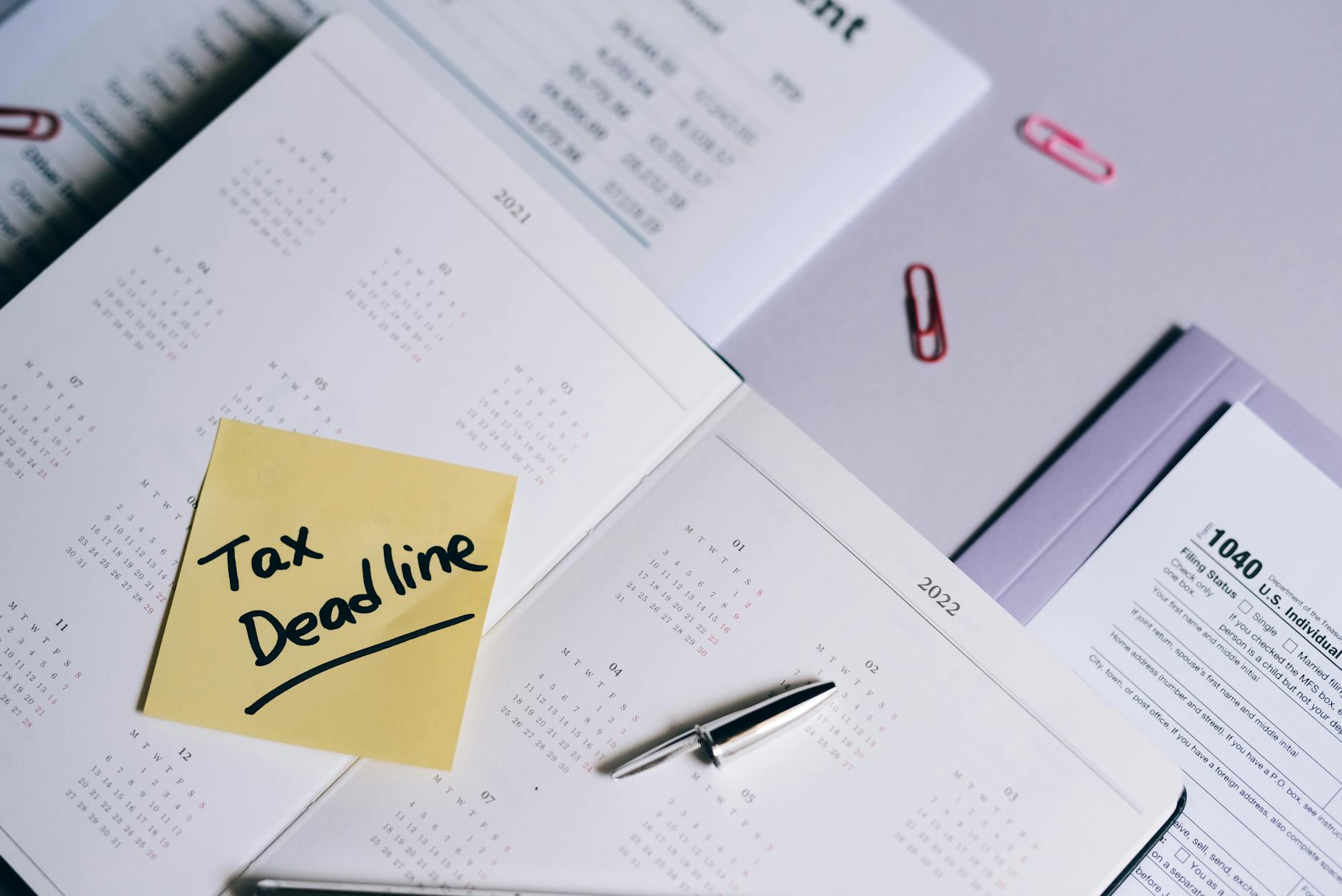
Your Corporation Tax Deadline for a 31 March 2026 Year End
If your company's accounting period ends on 31 March 2026, your corporation tax return (the CT600) must be filed with HMRC by 31 March 2027. That is 12 months after the year end.
Your corporation tax payment is due by 1 January 2027. That is 9 months and 1 day after the year end. Your Companies House annual accounts are due by 31 December 2026 (9 months after year end). These are three separate deadlines. You need to hit all of them.
Let us be precise about the dates because HMRC does not give leeway on this. The corporation tax deadline 31 March 2026 companies face is fixed by legislation. There is no extension for small companies, no grace period for first-time filers, and no automatic deferral if your accountant is busy.
Why the Three Deadlines Differ
Three separate statutory deadlines apply to a company with a 31 March 2026 year end, each governed by different legislation.
So for a 31 March 2026 year end:
- CT600 filing deadline (HMRC): 31 March 2027 (12 months after period end)
- Corporation tax payment deadline: 1 January 2027 (9 months and 1 day after period end)
- Companies House accounts deadline: 31 December 2026 (9 months after period end)
The payment deadline (1 January 2027) actually falls before the CT600 filing deadline (31 March 2027). In practice, most companies file and pay at the same time, but legally the return can be submitted any time up to 31 March 2027.
Note that Companies House gives new companies 21 months from incorporation for their first accounts. But after that, it is 9 months from year end for every filing.
What Happens If You Miss the Corporation Tax Deadline 31 March 2026?
Miss the filing deadline and HMRC issues an automatic penalty. The penalty structure for late corporation tax returns is:
- 1 day late: £100 penalty
- 3 months late: another £100
- 6 months late: HMRC estimates your tax bill and adds 10% of the unpaid tax
- 12 months late: 10% of any unpaid tax, or 20% if deliberate withholding
These penalties stack. A company that files its CT600 six months late could face £200 in fixed penalties plus 10% of the tax due. On a £20,000 tax bill, that is £2,200 in penalties before interest.
Miss the payment deadline and HMRC charges interest on the unpaid amount from the due date. The late payment interest rate is Bank of England base rate plus 4% (the margin rose from 2.5% to 4% on 6 April 2025). Interest accrues daily until the tax is paid in full.
If you are genuinely struggling to pay, HMRC does offer Time to Pay arrangements. You can set up a payment plan online if your tax bill is under £30,000 and you can clear it within 12 months. For larger amounts, you need to call HMRC's Business Payment Support Service. But you must apply before the deadline, not after.
How to Calculate Your Corporation Tax Bill for the Year Ended 31 March 2026
The corporation tax rate for Financial Year 2025 (FY2025, which runs from 1 April 2025 to 31 March 2026) depends on your company's taxable profits.
For FY2025 (the year ended 31 March 2026):
- Profits up to £50,000: 19% (small profits rate)
- Profits between £50,000 and £250,000: marginal relief applies, effective rate between 19% and 25%
- Profits above £250,000: 25% (main rate)
The marginal relief fraction for 2025/26 is 3/200. If your profits fall between £50,000 and £250,000, the calculation is not straightforward. We run this calculation for every client because the marginal relief formula catches many directors out.
Here is a worked example. Say your company's taxable profit for the year ended 31 March 2026 is £92,800. The corporation tax calculation is:
- Tax at 25%: £23,200
- Less marginal relief: (£250,000 - £92,800) x 3/200 x £92,800/£92,800 = £2,358
- Tax payable: £20,842
That is an effective rate of 22.5%. The company is above the small profits rate but below the main rate.
If your company has associated companies, the profit thresholds are divided by the total number of associated companies plus one. A company with two associated companies has thresholds of £16,667 (£50,000/3) and £83,333 (£250,000/3). This is a common trap for groups of companies or director/shareholders with multiple trading entities.
What You Need to File With Your CT600
The CT600 is the core corporation tax return. But most companies also need to file supplementary pages depending on their circumstances.
Common supplementary pages for a 31 March 2026 return include:
- CT600A: Loans to participators (director's loan account overdrawn at year end)
- CT600C: Chargeable gains (if you sold any business assets)
- CT600E: Controlled foreign companies (rare for small businesses)
- CT600J: R&D tax relief claim (if you are claiming R&D credits)
You also need to file your statutory accounts (the balance sheet and profit and loss account) with the CT600. HMRC requires these even if you have already filed them at Companies House. The accounts must be prepared under UK GAAP or FRS 102, depending on the size of your company.
For most small limited companies, micro-entity accounts or abridged accounts are sufficient. But HMRC will reject a CT600 if the attached accounts are incomplete or inconsistent with the return figures.
How to File Your Corporation Tax Return
You can file the CT600 yourself through HMRC's online service if you have the right software. Most accounting platforms like Xero, FreeAgent, QuickBooks, and Sage 50 support direct CT600 filing. Alternatively, your accountant will file it through their practice software, typically Iris, TaxCalc, or Digita.
If you are filing manually, HMRC no longer accepts paper CT600 forms. Everything must be filed digitally through compatible software. This is part of HMRC's Making Tax Digital programme, though corporation tax is not yet fully within MTD. It will be in the coming years, but for 2026, digital filing is already mandatory.
You need to have your company's Government Gateway user ID and password. If you do not have one, you can set it up online. It takes about 20 minutes. You will need your company's Unique Taxpayer Reference (UTR), which HMRC issued when you registered the company for corporation tax.
What If Your Year End Is Not 31 March?
The same rules apply to any accounting period. If your year end is 30 April 2026, your CT600 filing deadline is 30 April 2027 (12 months after year end), your payment deadline is 1 February 2027 (9 months and 1 day), and your Companies House accounts are due 31 January 2027 (9 months). If your year end is 31 December 2025, your CT600 filing deadline is 31 December 2026 (12 months after year end), your payment deadline is 1 October 2026 (9 months and 1 day), and your Companies House accounts are due 30 September 2026 (9 months).
The principle is always the same. Count forward 9 months from the last day of the accounting period for the Companies House accounts deadline. Add one day for the corporation tax payment. Count forward 12 months for the CT600 return filing deadline.
Many directors prefer a 31 March year end because it aligns with the tax year. It makes personal tax planning simpler, especially if you are drawing dividends and salary from the company. But there is no legal requirement to use 31 March. You can choose any year end when you incorporate, and you can change it later with HMRC's permission.
Check if and when MTD applies to you
Skip the spreadsheet. Tell us about your situation and a specialist will review your position and the next sensible step, with no obligation.
Can You Change Your Year End to Avoid the 31 March Rush?
You can change your company's accounting reference date with Companies House. But you cannot do it purely to extend a filing deadline. If you change your year end mid-year, you create a short accounting period, which still has its own CT600 filing deadline 12 months after it ends (and Companies House accounts due 9 months after it ends).
For example, if you change from 31 March to 31 December partway through the year, you will have a short period from 1 April to 31 December. That short period still needs a CT600 filed by 31 December of the following year (12 months after the short period ends). You do not get extra time.
If you are considering a year end change, speak to your accountant first. The administrative cost of managing a short period often outweighs any perceived benefit of moving away from the March rush.
Practical Steps to Hit the Corporation Tax Deadline 31 March 2026
Here is what we recommend to every client with a 31 March year end:
Start gathering figures by June 2026. Do not wait until November. The sooner your bookkeeping is up to date, the sooner your accountant can prepare the return.
Reconcile your director's loan account. If you have taken money from the company during the year, make sure you know the balance at year end. If it is overdrawn by more than £10,000, there is a benefit in kind to report on your P11D. If it is still overdrawn 9 months and 1 day after year end, the company faces a Section 455 tax charge of 33.75% on the outstanding amount.
Check your capital allowance position. If you bought equipment, vehicles, or machinery during the year, you may be able to claim Annual Investment Allowance (AIA) at 100% on most assets up to £1,000,000. For a company with a 31 March 2026 year end, the AIA limit is £1,000,000 for the whole period.
Review your dividend vouchers. If you paid dividends during the year, you need to have board minutes and dividend vouchers for each payment. HMRC can ask for these if they open a compliance check.
Set aside the tax cash. If your estimated corporation tax bill is £20,000, put £20,000 into a separate business savings account by September 2026. Do not rely on having the cash available in December. Christmas and New Year are expensive periods for many businesses.
What About Quarterly Instalment Payments?
Most small companies do not need to pay corporation tax in instalments. The quarterly instalment regime applies only to companies with taxable profits above £1.5 million per year. If your profits are below that threshold, you pay the full amount 9 months and 1 day after year end.
There is an exception for companies that were in the instalment regime in the previous year and have dropped below the threshold. HMRC may still expect instalments in the first part of the current year. If that applies to you, your accountant will flag it.
For the vast majority of UK limited companies with a 31 March 2026 year end, the payment date is simply 1 January 2027. One payment. One deadline.
Filing Early: Can You File Before 31 March 2027?
Yes. You can file your CT600 as soon as your accounts are finalised and the return is complete. There is no minimum holding period. If your accounts are ready by October 2026, file them then.
Filing early has advantages:
- You know the exact tax due and can pay it
- You remove the risk of forgetting the deadline
- HMRC closes the compliance window earlier (they usually have 12 months to open an enquiry from the filing date, so filing early starts that clock ticking)
One caveat: do not file early if the figures are not final. Amending a CT600 after filing is possible but time-consuming. Make sure the return is correct before you submit.
What If Your Company Has No Tax to Pay?
If your company made a loss or had no taxable profit for the year ended 31 March 2026, you still need to file a CT600. There is no exemption for nil returns. HMRC expects a return from every active company, even if the tax bill is zero.
Filing a nil return is straightforward. You enter zero for the taxable profit figure and submit the CT600 with your accounts. The CT600 filing deadline is still 31 March 2027. Miss it and you still face the £100 penalty.
If your company is dormant (no trading activity, no income, no expenses), you may be able to file simplified dormant accounts at Companies House and a simple CT600 with HMRC. But you must still file both. Dormancy does not exempt you from filing.
How Holloway Davies Can Help
We handle corporation tax returns for companies with year ends across the calendar. The 31 March year end is the most common, and we know exactly how to manage the workflow.
Our process is simple. You send us your bookkeeping data (or we pull it from your Xero, FreeAgent, or QuickBooks account). We prepare the statutory accounts and the CT600. We review the return with you. Then we file it before the 31 March 2027 CT600 deadline, and we remind you of the 1 January 2027 payment date and the 31 December 2026 Companies House accounts deadline.
We also calculate the tax due and remind you of the payment date. If you want us to handle the payment directly from your business account, we can set that up with your authority.
If you are unsure about any aspect of your corporation tax filing for the year ended 31 March 2026, get in touch. We will walk you through the numbers and make sure you hit every deadline.