
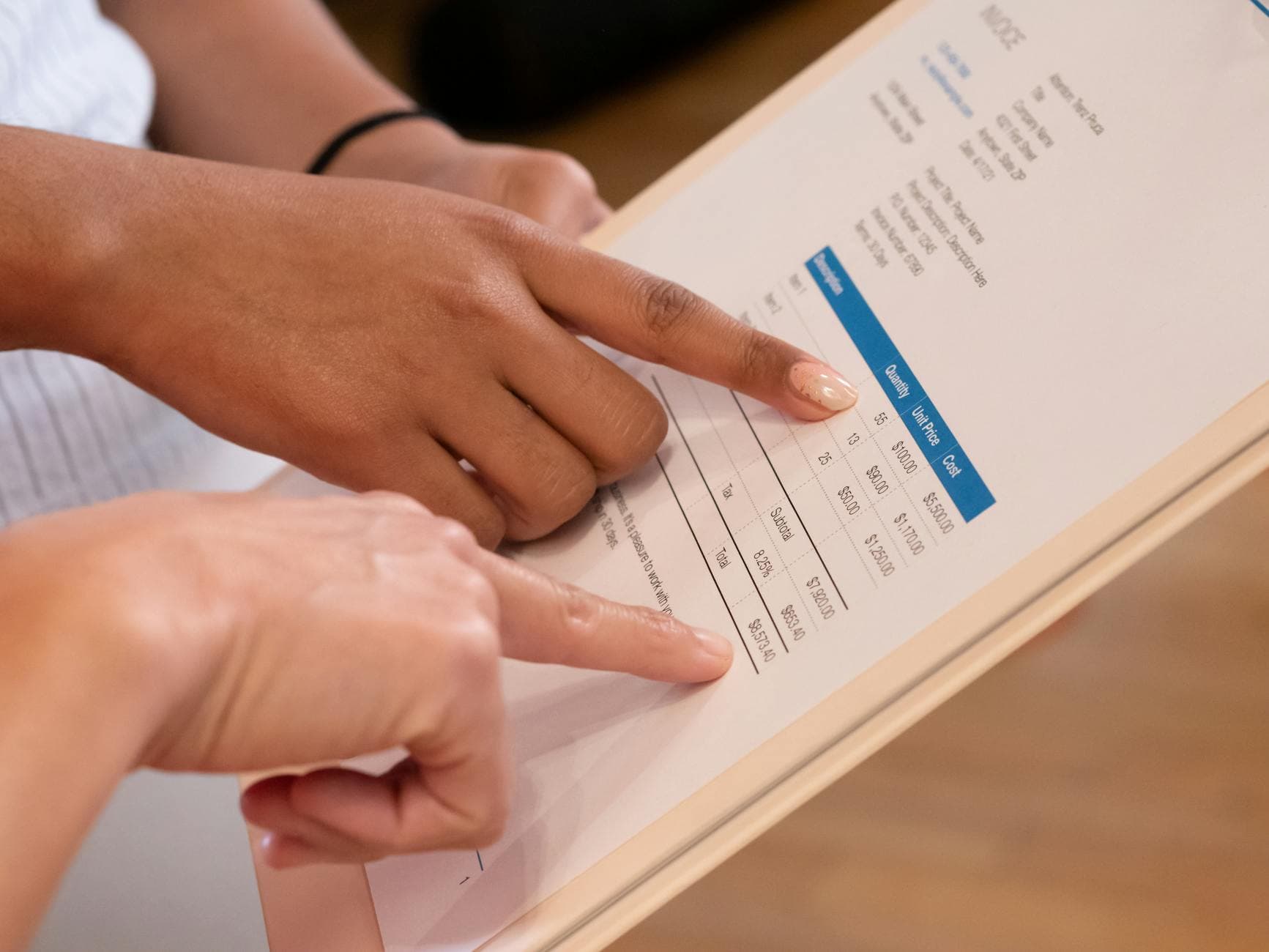
If you are searching for "accounting service charges" in 2025/26, you are probably trying to work out what a fair price looks like and whether you are getting value for money. You are right to check. The range of prices across the market is wide, and the services bundled into those prices vary even more.
We are specialist accountants at Holloway Davies. We work with limited companies, contractors, sole traders, and partnerships across every sector. This article explains exactly what accounting service charges typically cover, what they do not cover, and how to compare quotes on a like-for-like basis.
What Is Included in a Standard Accounting Service Charge?
A standard monthly or annual accounting fee usually covers the compliance work required to keep your business legally filed and tax-compliant. The exact scope depends on your business structure. Here is what a typical package includes for each type of client.
For Limited Companies
Most limited company accounting packages cover these core items:
- Preparation and filing of annual accounts at Companies House
- Preparation and filing of the corporation tax return (CT600) with HMRC
- Computation of the corporation tax liability, including marginal relief calculations where profits fall between £50,000 and £250,000
- Personal tax return (SA100) for the director, including the self-employment pages (SA103) if you are also a sole trader elsewhere
- Dividend paperwork and tax vouchers
- Ongoing bookkeeping support, usually through Xero, FreeAgent, or QuickBooks
- Quarterly or monthly management accounts reviews
- Confirmation statement filing
- PAYE and payroll for the director, including RTI submissions and P32 summaries
- Advice on director salary and dividend planning
A typical price for this level of service in 2025/26 ranges from £100 to £200 per month for a straightforward single-director limited company. That is for a business with simple transactions, no stock, and no employees beyond the director.
For Sole Traders
Sole trader accounting service charges are generally lower because the compliance requirements are simpler. A standard package usually includes:
- Preparation and filing of the self assessment tax return (SA100 and SA103)
- Calculation of income tax and Class 4 National Insurance (Class 2 NIC was abolished from April 2024; voluntary Class 2 is only relevant for low earners protecting their NI record)
- Advice on allowable expenses and capital allowances
- Bookkeeping support, often via FreeAgent or QuickBooks
- Help with VAT registration and returns if applicable
- Planning for Making Tax Digital for Income Tax (MTD for ITSA), which becomes mandatory from April 2026 for those with qualifying income over £50,000
Monthly charges for sole traders typically sit between £50 and £100. Annual one-off filings can cost between £200 and £500 depending on complexity.
For Partnerships
Partnership accounting is more complex than sole trader work. The partnership itself files a partnership return (SA800), and each partner files their own SA100 showing their share of the profits. A standard partnership package covers:
- Partnership tax return (SA800) preparation and filing
- Individual partner tax returns (SA100) for up to two or three partners
- Profit-sharing allocation and current account tracking
- Capital account records and drawings monitoring
- VAT returns if the partnership is VAT-registered
Partnership charges usually start around £150 to £250 per month, rising with the number of partners and the complexity of the profit-sharing arrangements.
What Is Not Included in Standard Accounting Service Charges?
This is where most of the confusion comes from. A standard accounting service charge covers compliance. It does not cover everything. Here are the common items that are almost always charged separately or as add-ons.
VAT Returns
Some packages include quarterly VAT returns. Many do not. If your business is VAT-registered and your accountant charges extra for VAT work, expect to pay between £20 and £50 per return on top of the base fee. Flat rate VAT schemes, partial exemption calculations, and capital goods scheme adjustments cost more.
R&D Tax Credits
R&D tax credit claims are specialist work. They require detailed technical reports and cost breakdowns. Most accountants charge separately for this. Fees are often a fixed amount or a percentage of the claim value. For an SME-intensive company using the enhanced R&D Intensive Scheme (ERIS), the claim work can be significant. We handle this at Holloway Davies as a separate service with transparent pricing.
Company Formation
Setting up a new company is not included in ongoing accounting charges. If you are incorporating, expect a one-off fee of £50 to £200. This covers the Companies House registration, the CT41G filing, and the initial setup of accounting software. See our incorporation services for details.
Payroll for Employees Beyond the Director
If you have employees beyond yourself, payroll costs extra. A basic payroll for one or two employees might add £10 to £30 per month. If you are in construction and need CIS300 returns, that is another add-on.
HMRC Investigations and Enquiries
If HMRC opens an enquiry into your tax return, that is not covered by the standard fee. Accountants charge separately for enquiry work because it is unpredictable and time-intensive. Fees can range from £150 per hour to a fixed fee of £1,000 or more depending on the complexity.
Business Tax Planning and Advisory Work
Standard accounting service charges cover routine tax planning like salary and dividend optimisation. But if you need more bespoke advice, such as restructuring your business, planning an exit, or dealing with a complex share structure, that is additional work. Many firms offer separate advisory packages or charge by the hour for this.
What Drives the Cost of Accounting Service Charges?
Not all accounting firms price the same way. Here are the factors that determine what you pay.
Business Structure
Limited companies cost more to service than sole traders. A limited company has two sets of accounts (statutory accounts for Companies House and tax accounts for HMRC), a corporation tax return, a confirmation statement, and often a payroll. Sole traders file one self assessment return. The difference in compliance workload is significant.
Transaction Volume
An ecommerce business with 500 transactions per month takes more bookkeeping time than a consultant issuing four invoices per month. Accountants price partly on volume. If you have high transaction counts, expect a higher fee.
Software and Automation
Firms that use automated bookkeeping software like Dext, Hubdoc, or AutoEntry can process receipts and invoices faster than firms relying on manual entry. This can lower the cost. If your accountant insists on paper receipts and manual spreadsheets, you are paying for their inefficiency.
Location and Firm Type
A high-street firm in London's Canary Wharf or Manchester's city centre will charge more than a remote firm based in a smaller town. Online-only firms tend to be cheaper because they have lower overheads. We operate from offices in Manchester's Northern Quarter and serve clients across the UK, with pricing that reflects the value of expert advice without the central London premium.
Advisory vs Compliance Focus
Some firms offer a compliance-only service at a low price. Others bundle in regular advisory meetings, cash flow forecasting, and strategic planning. The latter costs more but often saves you more in tax than the fee difference.
How to Compare Accounting Service Charges Properly
When you get quotes from different accountants, compare the scope of work, not just the monthly fee. Ask these questions:
- Does the fee include my personal tax return, or is that extra?
- Are VAT returns included?
- Is the confirmation statement included?
- Do you handle payroll for directors and employees?
- What software do you use? Do I pay for it separately?
- How many face-to-face or video meetings are included per year?
- What is the hourly rate for work outside the scope?
- Do you charge for phone calls and emails?
A £100 per month quote that excludes VAT returns and your personal tax return is not cheaper than a £150 per month quote that includes everything. Do the comparison on total annual cost for the full scope of work you need.
Typical Accounting Service Charges by Business Type (2025/26)
These are real-world ranges based on what we see across the market. Your specific quote may vary, but this gives you a benchmark.
| Business Type | Monthly Range | Annual Equivalent |
|---|---|---|
| Sole trader (simple, no VAT) | £50-£80 | £600-£960 |
| Sole trader (VAT registered) | £70-£120 | £840-£1,440 |
| Single-director Ltd company | £100-£200 | £1,200-£2,400 |
| Ltd company with employees | £150-£300 | £1,800-£3,600 |
| Partnership (2 partners) | £150-£250 | £1,800-£3,000 |
| Partnership (3+ partners) | £200-£400 | £2,400-£4,800 |
These figures assume standard compliance work with no significant complexity. If you have overseas transactions, multiple trading entities, or complex group structures, expect higher charges.
Want this checked against your specific situation?
Leave your details and a one-line summary. A specialist will reply within 24 hours, with no obligation.
Speak to a specialist about your compliance
Skip the spreadsheet. Tell us about your situation and a specialist will review your position and the next sensible step, with no obligation.
What You Get for Your Money at Holloway Davies
We structure our accounting service charges to be transparent and predictable. Every client gets a fixed monthly fee with a clear scope of work. There are no surprise bills for standard compliance work. Our packages include:
- Dedicated specialist accountant as your point of contact
- FreeAgent or Xero software included in the fee
- Quarterly reviews and year-end planning meetings
- Unlimited email support and scheduled phone calls
- All statutory filings: accounts, CT600, confirmation statement, VAT returns, payroll
- Director personal tax returns
- Tax planning advice as standard, not as an upsell
We do not charge extra for phone calls, emails, or routine questions. That is part of the service. If you need specialist work like R&D claims, company formation, or HMRC enquiry support, we quote that separately so you know exactly where you stand.
You can see our full service breakdown on our services page or get a tailored quote through our contact page.
Should You Pay Monthly or Annually?
Most accounting firms charge monthly by direct debit. This spreads the cost evenly across the year. Some firms offer a discount if you pay annually upfront, typically 5% to 10% off the total.
Monthly is usually the better option for cash flow. The annual discount is modest enough that it rarely justifies tying up the capital. Pay monthly, review the service quarterly, and switch if you are not getting value.
When to Question Your Accounting Service Charges
If any of these apply to your current arrangement, it is worth reviewing your fee:
- You are paying more than £250 per month for a single-director Ltd company with no employees
- Your accountant charges extra for the confirmation statement or your personal tax return
- You are billed for every phone call or email
- Your accountant uses manual spreadsheets and does not offer cloud software
- You never receive proactive tax planning advice
- Your fee has increased without a clear explanation of what changed
If you recognise any of these, speak to us. We can review your current scope and give you a like-for-like comparison. That is a free conversation, not a sales pitch.
Final Thoughts
Accounting service charges in 2025/26 range from £50 per month for a simple sole trader to £400 per month or more for a complex limited company with employees. The key is not the headline number. It is what you get for it.
A good accountant saves you more than they cost. That happens through proactive tax planning, accurate filing that avoids penalties, and advice that helps you make better business decisions. If your accountant only files your returns and never talks to you, you are overpaying regardless of the monthly fee.
If your business has changed in the last year, or if you are unsure whether your current accounting service charges are fair, get in touch. We will give you a straight answer.