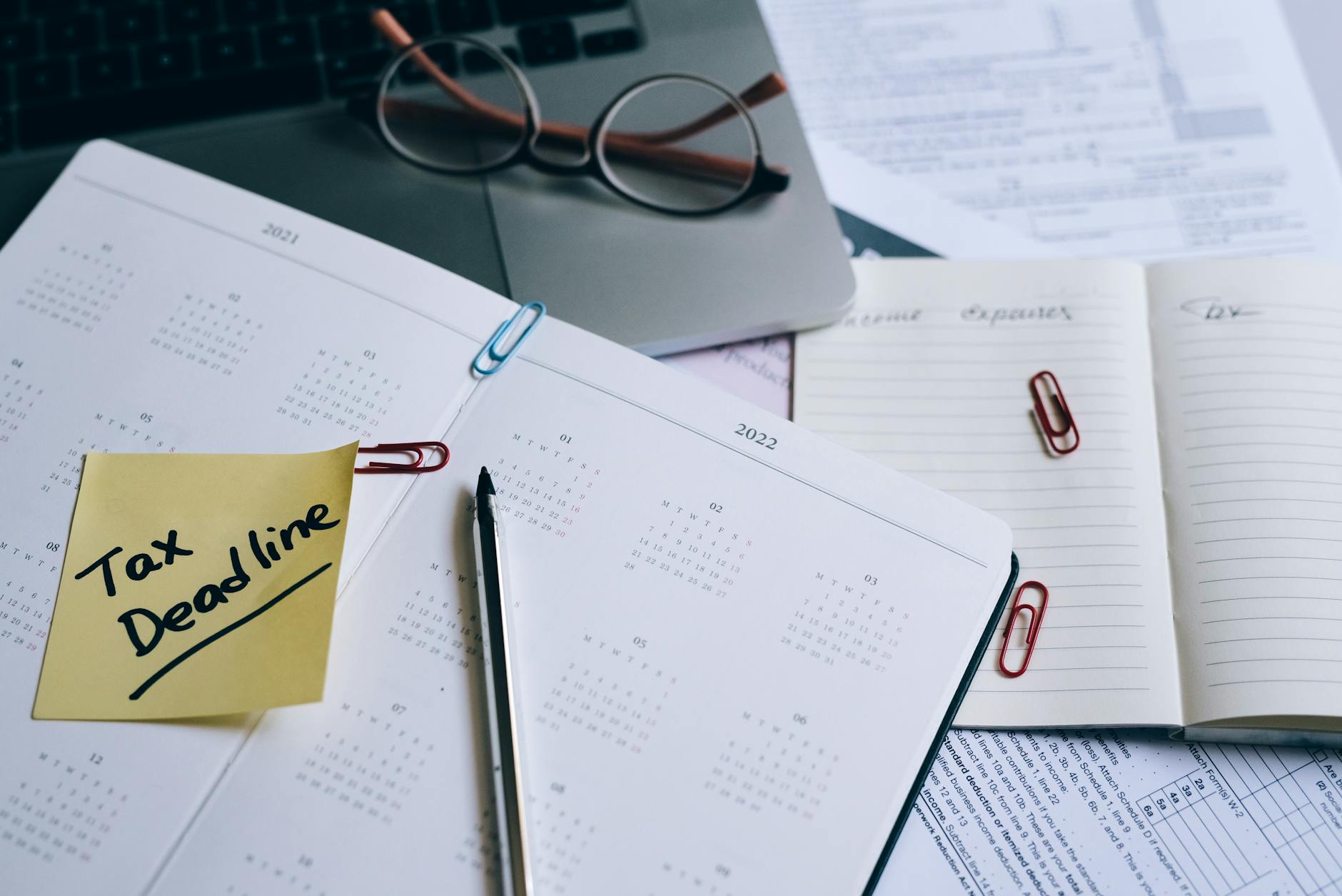
If you run a business as a sole trader, HMRC gives you a single filing deadline for your self assessment tax return. Miss it and you get a £100 penalty immediately. Leave it longer and the fines stack up to £900 plus interest on unpaid tax.
A sole trader accountant does not just prepare your return. They manage the calendar of deadlines that surround it. Three dates in particular catch sole traders out every year. Knowing them is useful. Having someone who files on your behalf is better.
Here are the three deadlines a sole trader accountant prevents you missing, with the real numbers that make the difference.
1. The 31 January Self Assessment Filing and Payment Deadline
This is the one everyone knows about. But knowing about it and meeting it are two different things.
For the 2024/25 tax year, your online self assessment return is due by 31 January 2026. The same day your tax bill for that year is due, plus the first payment on account for 2025/26.
A sole trader who files their own return often underestimates how long it takes to pull together all the records. Receipts from twelve months of trading. Bank statements. Invoices. Mileage logs. If you run a trade business in Birmingham or a consultancy from a home office in Bristol, the volume of paperwork is similar. It takes time.
A sole trader accountant requests your records in November or December, prepares the return, and files it weeks before the deadline. That gives you time to review the figures and arrange payment without last-minute stress.
The cost of missing this deadline is not just the £100 initial penalty. If your return is more than three months late, you get an additional £10 per day up to a maximum of £900. After six months, it is another £300 or 5% of the tax due, whichever is greater. After twelve months, it is another £300 or 5% of the tax due.
A sole trader with a £15,000 tax bill who files twelve months late faces penalties of £2,500 plus interest. That is money you could have kept by using an accountant to file on time.
2. The 31 July Payment on Account
This deadline catches more sole traders than the January one. And it is the one most people forget.
HMRC expects you to pay your tax in instalments. If your tax bill for 2024/25 is over £1,000 (and less than 80% of your total tax liability was deducted at source, which is almost always the case for sole traders), you must make payments on account towards the following year's bill.
The first payment on account is due on 31 January alongside your main bill. The second is due on 31 July.
Here is the trap. A sole trader files their 2024/25 return by 31 January 2026 and pays the tax plus the first payment on account. They breathe out. Then July arrives and they have forgotten the second payment is due. HMRC charges interest from the due date, even if you pay a few days late.
An accountant flags this deadline in their calendar. They remind you in June that the payment is coming. They check that your payments on account are accurate and that you are not overpaying. If your income has dropped significantly, they can apply to reduce the payments on account, which stops you paying tax you do not owe.
But be careful. If you reduce payments on account and your income has not dropped, HMRC charges interest on the underpaid amount. That is where professional judgement matters. A sole trader accountant knows when it is safe to reduce and when it is not.
For a sole trader in Leeds with a typical annual bill of £12,000, the 31 July payment is often around £3,000 to £4,000. Forgetting it means interest at 7.25% from the due date. Over six months that is roughly £145 in interest. Avoidable entirely with a simple reminder.
3. The National Insurance Record Deadline
This is the one that sneaks up on sole traders who have been trading for a while and think they have everything covered.
Class 2 National Insurance contributions were abolished from 6 April 2024. There is no flat-rate weekly Class 2 charge for 2024/25 or 2025/26, and no separate Class 2 payment deadline. Many sole traders and some outdated guides still refer to it as a live obligation, but it no longer exists as a mandatory charge.
How you build your National Insurance record now depends on your profit level. If your profits exceed the Lower Profits Limit (£12,570 in 2025/26), your Class 4 NIC liability generates a qualifying year towards your state pension automatically through your self assessment return. If your profits fall between the Small Profits Threshold (£6,845) and the Lower Profits Limit, you receive deemed NI credits at no additional cost. If your profits are below the Small Profits Threshold and you want to protect your record, voluntary Class 2 contributions are still available.
For most sole traders, this means your National Insurance record depends on filing your self assessment return accurately and on time. Your Class 4 liability (6% on profits from £12,570 to £50,270, then 2% above that) is calculated as part of your return. A late or inaccurate return can leave a gap in your NI record for that year.
A sole trader accountant ensures your return correctly reflects your trading profit, which determines both your tax bill and your NI credit for the year. They also check whether voluntary contributions are relevant if your profits are low. And they file early enough that everything is in order before the 31 January deadline.
This is particularly important for sole traders nearing retirement age. A single gap in your National Insurance record can reduce your state pension by around £275 per year for the rest of your life. Over a twenty-year retirement, that is £5,500 lost because of a late or incorrect return.
An accountant who handles your filing prevents that loss entirely.
Free Sole trader and self-employment tool
Calculate your take-home pay as a sole trader
Our interactive tool is designed for a larger screen. Leave your details and a specialist will send your figure and the next sensible step, with no obligation.
Calculate your take-home pay as a sole trader
Skip the spreadsheet. Tell us about your situation and a specialist will review your position and the next sensible step, with no obligation.
How a Sole Trader Accountant Manages the Calendar
The three deadlines above are the most common ones we see sole traders miss. But there are others that depend on your specific circumstances.
If you register for VAT voluntarily, your VAT return deadlines are quarterly. If you employ staff, your PAYE deadlines are monthly. If you have a student loan, your self assessment calculation includes that repayment and the payment on account dates still apply.
An accountant does not just remember these dates. They build a schedule around your business. They know when your year ends, when your records will be ready, and when each payment is due. They file your return early enough that you have time to arrange payment without borrowing or using a credit card.
At Holloway Davies, our experienced team works with sole traders across every sector. We see the same pattern every year. The sole traders who file early and pay on time are the ones who have professional support. The ones who file late and pay penalties are the ones doing it alone.
That is not a criticism. Running a business takes up all your attention. Tax deadlines are easy to overlook when you are focused on delivering work, managing clients, and keeping the cash flow healthy. That is exactly why an accountant exists.
If you want to see how we manage these deadlines for our clients, take a look at our services page. We cover everything from self assessment filing to VAT returns and payroll, all on a schedule that keeps you compliant.
What Happens When You Miss a Deadline
The penalty structure for late self assessment filing is fixed and automatic. HMRC does not send a warning letter first. The £100 penalty triggers on day one after the deadline. There is no grace period.
After three months, the daily penalties start. After six months, the 5% penalty applies. After twelve months, another 5% applies. On top of that, interest accrues on unpaid tax from the due date until the date you pay.
For a sole trader with a £10,000 tax bill who files six months late, the penalties look like this:
- Initial £100 penalty
- Daily penalties of £10 per day for 90 days: £900
- Six-month penalty of 5% of £10,000: £500
- Total penalties: £1,500
- Plus interest on the unpaid tax from 31 January
That is £1,500 you could have avoided by filing on time. A sole trader accountant typically costs less than that for a full year of compliance work. The maths is straightforward.
What to Do If You Have Already Missed a Deadline
If you have missed a deadline, do not ignore it. HMRC will not forget. The penalties will keep accruing until you file and pay.
Contact HMRC as soon as you realise. If you have a reasonable excuse, such as a serious illness or a family bereavement, you can appeal the penalty. HMRC publishes guidance on what counts as a reasonable excuse. It is not a long list. Losing your diary or being busy at work does not qualify.
If you do not have a reasonable excuse, file and pay as quickly as possible. The daily penalties stop once you file. The interest stops once you pay. Every day you delay costs you money.
Then get an accountant in place for next year. One missed deadline is expensive. Two is avoidable. Three means you are losing money that could be in your pocket.
You can contact us directly to discuss your situation. We take on clients who have missed deadlines and get them back on track.
Should You Hire a Sole Trader Accountant?
If your self assessment return is straightforward and you are disciplined about deadlines, you might manage without one. But the data tells a different story. HMRC issued over 800,000 late filing penalties in the 2022/23 tax year alone. That is roughly one in seven sole traders getting fined.
The sole traders who avoid penalties are not necessarily more organised. They have someone else managing the calendar. An accountant costs a fraction of what a single late filing penalty costs, and they do more than just file your return. They find deductions you missed. They check your payments on account are accurate. They advise on whether to register for VAT or incorporate.
If you are thinking about whether an accountant is worth it, start with our fundamentals page. It explains what we do and how we work with sole traders. Or read our sole trader and self employment blog for more guidance on managing your tax affairs.
The three deadlines in this article are the ones that catch most sole traders out. A good accountant catches them before you do.