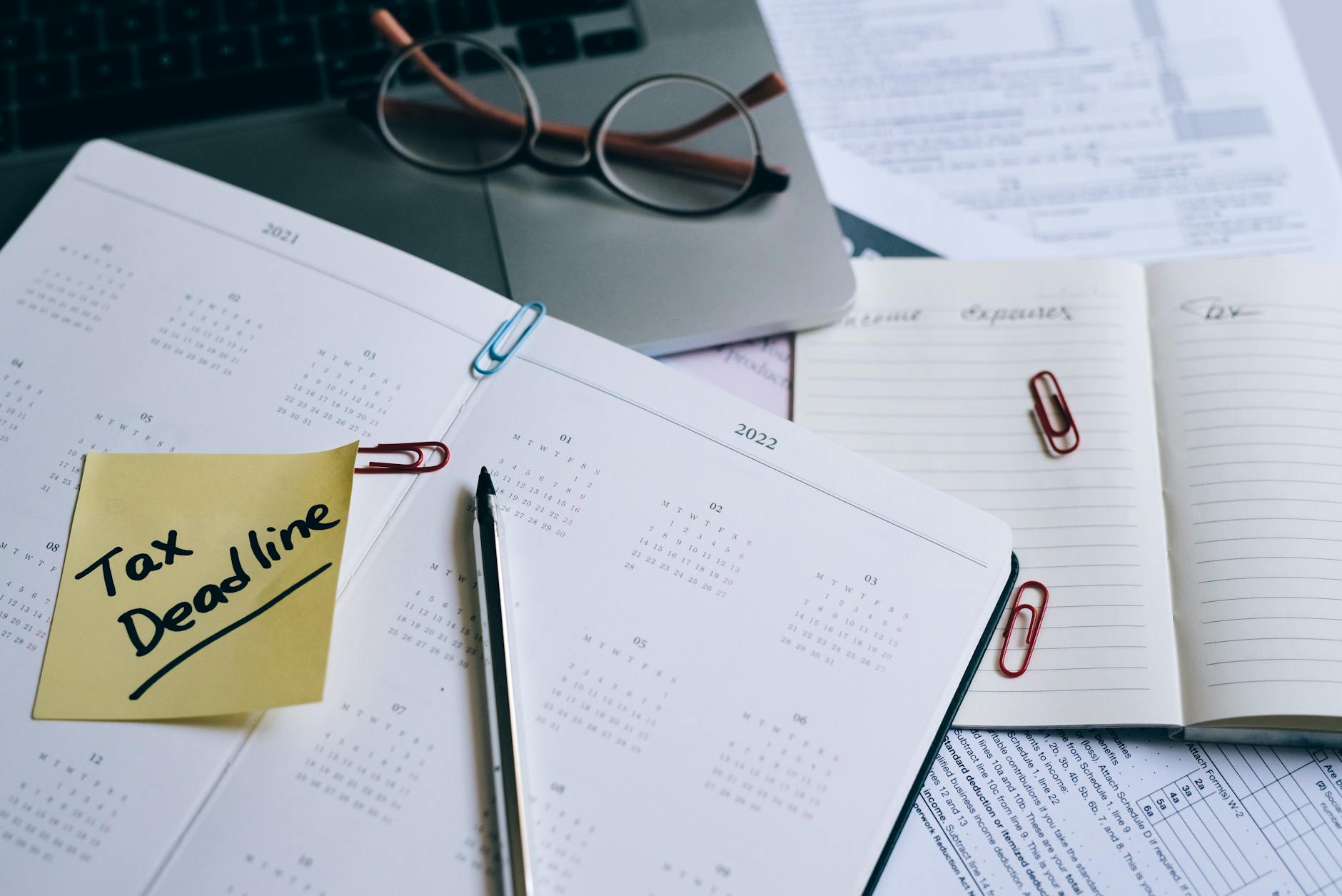
You are a sole trader in the UK. You run a growing consultancy in Bristol's Harbourside, or a trades business in Birmingham's Jewellery Quarter, or a freelance creative operation in Shoreditch. You know your craft. You do not live in the tax calendar.
That is where a sole trader accountant earns their keep. Not just by filing your return, but by making sure you never hit the penalty triggers that HMRC applies automatically. Late filing penalties, late payment interest, and surcharges all compound quickly. One missed deadline can cost you hundreds of pounds before you have even paid the underlying tax.
This post covers the three deadlines that matter most to sole traders. Each one has a specific date, a specific penalty structure, and a specific way a sole trader accountant keeps you compliant.
Deadline 1: 31 January - Self Assessment Filing and Balancing Payment
This is the big one. For most sole traders, 31 January is the date you file your online self assessment return (SA100 with SA103 self employment pages) and pay any tax you owe for the previous tax year. The tax year runs 6 April to 5 April. The filing and payment deadline is 31 January the following year.
So for the 2024/25 tax year (ended 5 April 2025), your online return and payment are due by 31 January 2026.
Miss the filing deadline and the penalties are automatic and escalating. HMRC applies a £100 late filing penalty immediately, even if you have no tax to pay. If you are still late after three months, daily penalties of £10 per day kick in, up to a maximum of £900. After six months, another £300 or 5% of the tax due, whichever is higher. After twelve months, another £300 or 5%.
Here is a worked example. You are a freelance graphic designer in Leeds. Your 2024/25 tax liability is £14,720. You file your return on 15 February 2026, two weeks late. The £100 penalty applies. You also pay the tax late. HMRC charges late payment interest at the Bank of England base rate plus 2.5% (the rate changes with each Bank of England decision; it was 7.0% in April 2025). On £14,720 for two weeks at that rate, that is roughly £40 in interest. Small numbers on their own. But if you miss the filing deadline by six months, the penalties alone reach £1,300 plus 5% of the tax.
A sole trader accountant prevents this by filing your return well before 31 January. Most of our clients at Holloway Davies have their returns submitted by mid December. That gives a six week buffer for any queries, missing paperwork, or HMRC system delays. It also means you know exactly what you owe before Christmas, not on 31 January.
What about paper returns?
Paper self assessment returns have an earlier deadline: 31 October. If you file on paper, the 31 January deadline does not apply. But very few sole traders use paper returns now. Most file online through HMRC's digital services or via their accountant's software (Xero, FreeAgent, QuickBooks, or Iris). The online deadline is 31 January.
Deadline 2: 31 July - Payments on Account
This is the deadline that catches many sole traders off guard. HMRC does not want to wait until the following January to collect all your tax. If your tax bill (after tax deducted at source) is more than £1,000, HMRC asks you to make payments on account. These are advance payments towards your next tax year's liability.
Each payment on account is 50% of the previous year's tax bill. The first payment is due by 31 January. The second is due by 31 July.
Here is a concrete example. You are a plumber in Manchester's Northern Quarter. Your 2024/25 tax bill is £9,600. HMRC calculates your payments on account for 2025/26 as two payments of £4,800 each. The first £4,800 is due by 31 January 2026 alongside any balancing payment for 2024/25. The second £4,800 is due by 31 July 2026.
Miss the 31 July payment and HMRC charges late payment interest from that date. At 7.75%, £4,800 for three months costs about £93 in interest. Payments on account attract interest only; the 5% late payment penalties (after 30 days, then at six and twelve months) bite on a late balancing payment, not on a late payment on account.
Most sole traders do not budget for payments on account. They see the 31 January bill, pay it, and forget about July. A sole trader accountant flags the July payment at the same time as the January one. We send reminders. We help you set aside the money monthly so the July payment is not a surprise. If your income has dropped significantly, we can apply to reduce your payments on account using form SA303. But that needs to be done before the deadline, not after.
When do payments on account not apply?
If your tax bill for the previous year was under £1,000, or if more than 80% of your tax was deducted at source (for example, through PAYE on a salary), HMRC will not ask for payments on account. Most sole traders with a single trade do not meet that exemption, so assume they apply unless your accountant tells you otherwise.
Deadline 3: 5 October - Registration for Self Assessment
This is the one that trips up new sole traders. If you started self employment in a tax year, you must register for self assessment by 5 October following the end of that tax year.
Example. You start your self employed carpentry business in Sheffield's Kelham Island on 1 September 2025. The tax year ends 5 April 2026. You must register with HMRC by 5 October 2026. If you miss that deadline, HMRC can charge a late registration penalty. The penalty is £100 for a late registration, with further penalties if HMRC had to chase you.
More importantly, if you do not register, you cannot file a return. And if you do not file a return, HMRC will eventually issue a determination of your tax liability based on their estimate of your income. Those determinations are almost always higher than your actual liability, and you have to pay them before you can file a return to correct them.
A sole trader accountant registers you within days of you starting trading. We handle the online registration through HMRC's Government Gateway. We also advise you on your Class 4 National Insurance obligations (calculated and collected through your self assessment return) and ensure you get your Unique Taxpayer Reference (UTR) before any filing deadlines approach.
If you are already trading and have not registered, do it today. The 5 October deadline applies even if you earned very little in your first year. There is no turnover threshold for registration. If you are self employed, even part time, you register.
What About National Insurance for Sole Traders?
Class 2 NIC was abolished from 6 April 2024. The old £3.45 per week charge no longer applies for 2024/25 or 2025/26. From 2024/25 onwards, sole traders with profits above the Lower Profits Limit pay only Class 4 NIC: 6% on profits between £12,570 and £50,270, then 2% on anything above. Class 4 is calculated and collected through your self assessment return, not as a separate bill.
If your profits are below the Small Profits Threshold (£6,845 for 2025/26), you can make voluntary contributions to protect your State Pension record. A sole trader accountant makes sure your self assessment includes the correct Class 4 calculation and advises whether voluntary contributions make sense for your situation. Missing NIC contributions can create gaps in your National Insurance record, affecting your State Pension entitlement later. It is a long-term cost that is invisible until retirement.
Free Sole trader and self-employment tool
Calculate your take-home pay as a sole trader
Our interactive tool is designed for a larger screen. Leave your details and a specialist will send your figure and the next sensible step, with no obligation.
Calculate your take-home pay as a sole trader
Skip the spreadsheet. Tell us about your situation and a specialist will review your position and the next sensible step, with no obligation.
How a Sole Trader Accountant Stops You Missing These Deadlines
You can manage these deadlines yourself. HMRC sends reminders by post and email. The self assessment system is digital. But here is what a sole trader accountant does that a calendar reminder cannot:
- Files early. We do not wait for 31 January. We file by December, sometimes November. That gives us time to resolve queries without penalty.
- Calculates payments on account. We show you the exact amounts due in January and July, and we help you budget for them.
- Registers you on day one. The moment you tell us you are starting self employment, we register you. No 5 October panic.
- Handles HMRC correspondence. If HMRC sends a penalty notice or a determination, we deal with it. We know the appeals process and the reasonable excuse arguments that work.
- Manages your bookkeeping. Most missed deadlines happen because the paperwork is not ready. We use Xero or FreeAgent to keep your records current all year, not just at year end.
Everything here is written against current HMRC guidance and reviewed before publication. Where you want the return filed and the payments on account set against your real numbers rather than an estimate, the call puts you in front of a qualified accountant on our partner team.
What Happens If You Miss a Deadline Anyway?
Penalties are not always final. HMRC will cancel a late filing penalty if you have a reasonable excuse. What counts as reasonable? Serious illness, a family bereavement, a postal strike, or a system failure outside your control. What does not count? Being too busy, forgetting, or relying on someone else who let you down.
If you have a reasonable excuse, we can write to HMRC asking them to cancel the penalty. We do this regularly for clients who have genuine issues. But the best approach is not to need the appeal in the first place.
Summary: The Three Dates You Need in Your Calendar
Write these down. Put them in your phone. Give them to your accountant.
- 5 October - Register for self assessment if you started self employment in the previous tax year.
- 31 January - File your online self assessment return and pay any balancing tax plus the first payment on account.
- 31 July - Pay the second payment on account.
If you work with a sole trader accountant, these dates become our problem, not yours. You focus on your business. We focus on the compliance.
If your turnover is approaching the VAT threshold, or if you are considering incorporating as a limited company, those introduce additional deadlines. But for a sole trader, these three are the foundation. Get them right and everything else follows.
If you are a sole trader in the UK and want to make sure you never miss a tax deadline, get in touch with us. We handle self assessment for sole traders across every sector, from trades to tech, from Manchester to Bristol. One conversation and we will have you on a schedule that keeps you compliant all year.