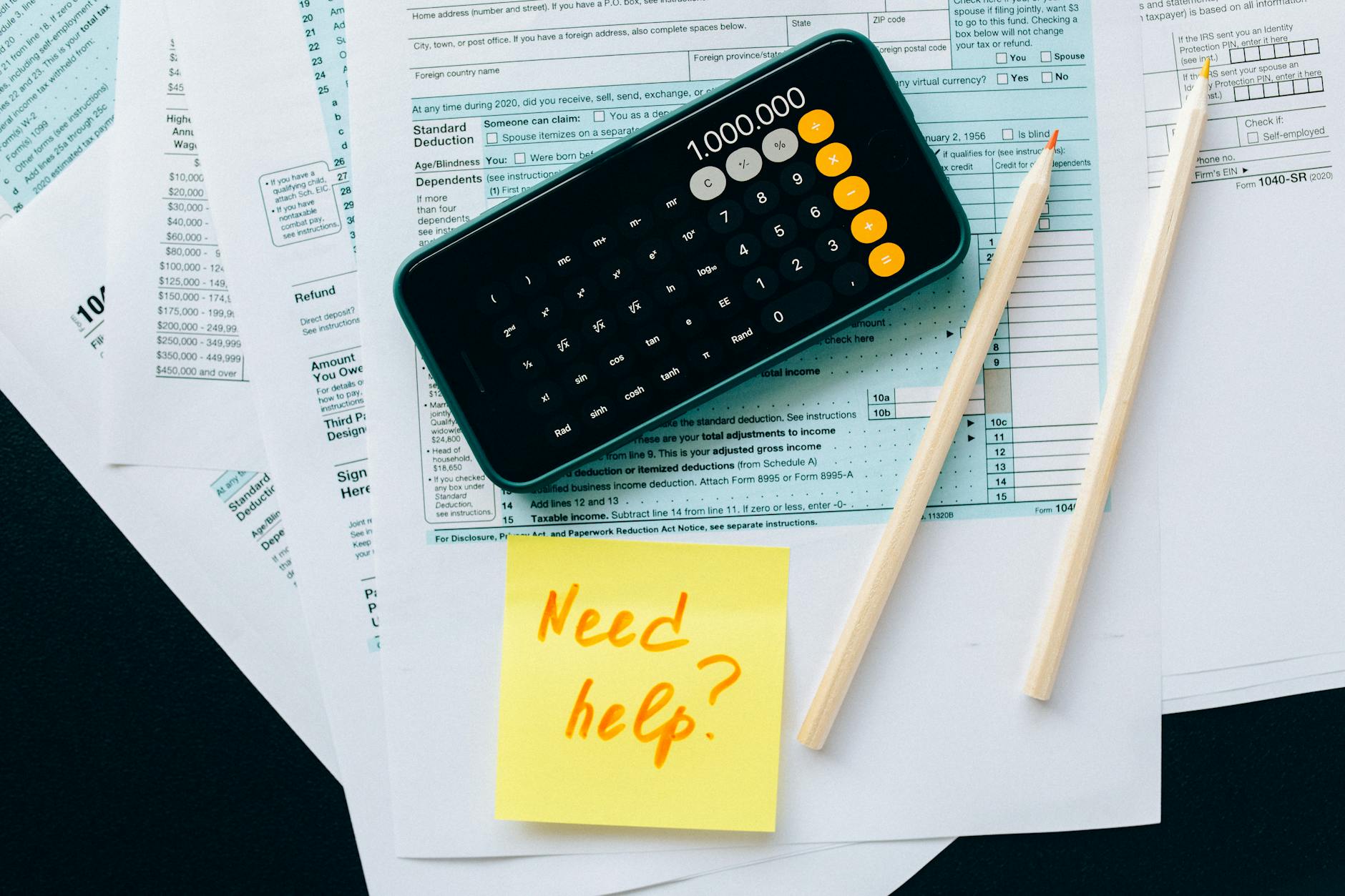
What Does a Self Assessment Accountant Actually Do for You?
If you are self employed, a sole trader, a company director, or a landlord with rental income above certain thresholds, HMRC expects you to file a self assessment tax return each year. The deadline is 31 January for online returns. Miss it and you face an automatic £100 penalty, with more fines stacking up the longer you delay.
A self assessment accountant does not just fill in boxes. They review your entire financial picture. They check you have claimed every allowable expense. They calculate your tax bill before HMRC does. And they make sure you are not overpaying or underpaying.
We are experienced accountants at Holloway Davies. We work with sole traders, contractors, company directors, and partnership owners across the UK. Our job is to make your self assessment straightforward and accurate.
Who Needs to File a Self Assessment Tax Return?
You must file a self assessment return if any of the following apply in the 2024/25 tax year (6 April 2024 to 5 April 2025):
- You were self employed as a sole trader and earned more than £1,000 in gross income
- You are a partner in a business partnership
- You are a company director and receive dividends or salary outside PAYE
- You have untaxed income over £2,500 from savings, investments, or property
- You have capital gains on assets you sold and need to report (including the 60-day CGT property return for UK residential property)
- Your income was over £60,000 and you or your partner claimed Child Benefit (the full charge applies at £80,000; both thresholds apply from 2024/25 onwards)
- You have a total income over £100,000
Many people assume they do not need to file because their employer handles PAYE. But if you have side income, freelance work, or rental properties, you almost certainly need to register for self assessment and file a return.
The Seasonal Reality: January is Peak Season for a Reason
The self assessment filing season runs from April to the following January. Most people leave it until December or January. That creates a bottleneck. HMRC's helpline gets swamped. Accountants get booked up. Stress levels rise.
If you are reading this in January or February, you are in the peak window. Many accountants stop taking new clients by mid-January. We keep our doors open but capacity is limited. The earlier you reach out, the more time we have to organise your records and file before the deadline.
What Does a Self Assessment Accountant Check?
When you work with us, we go through your return line by line. Here is what we look at:
Your Income Sources
We check every income stream you have: self employment profits, salary, dividends, rental income, savings interest, capital gains, and any other taxable income. If you are a director of a limited company, we also check your director's loan account to see if any loan amounts trigger a benefit in kind or the S455 tax charge.
Allowable Expenses
Most business owners underclaim expenses. They either miss them entirely or do not have the right evidence. We help you identify everything you can legitimately claim: office costs, travel, equipment, professional fees, insurance, marketing, and more. For sole traders, we also check if the simplified expenses scheme (using flat rates for vehicle and home office costs) works better than actual costs.
Dividend and Salary Planning
If you are a company director, the way you take money from your company affects your personal tax bill. We review your dividend and salary mix to make sure you are using your personal allowance and basic rate band efficiently. The dividend allowance for 2025/26 is £500. Dividend tax rates are 8.75% (basic), 33.75% (higher), and 39.35% (additional). Getting this wrong can cost you thousands.
Capital Gains
If you sold shares, property (that is not your main home), or a business in the tax year, you may owe capital gains tax. The main rates for 2025/26 are 18% (basic rate) and 24% (higher rate) for all chargeable assets, including residential property (the previous 28% residential rate was abolished from 30 October 2024). If you sold your business and qualify for Business Asset Disposal Relief (BADR), the rate was 10% for disposals before 6 April 2025, 14% for disposals made in 2025/26 (6 April 2025 to 5 April 2026), and rises to 18% from 6 April 2026. The £1 million lifetime limit still applies.
Pension Contributions
Pension contributions reduce your taxable income. If you are a higher rate taxpayer, you can claim back 20% or 25% additional relief through your self assessment return. Many people miss this. We do not.
What Happens If You File Late or Get It Wrong?
HMRC's penalty system is automatic and unforgiving. Here is what happens if you miss the 31 January deadline:
- 1 day late: £100 fixed penalty
- 3 months late: £10 per day up to 90 days (so up to £900 extra)
- 6 months late: £300 or 5% of the tax due (whichever is higher)
- 12 months late: £300 or 5% of the tax due, plus potential 100% of the tax in serious cases
And that is before interest on any unpaid tax. HMRC charges interest on late payments from the due date. The rate changes quarterly but has been around 7.75% recently.
If you file an inaccurate return, HMRC can open an enquiry. That means more time, more stress, and potentially more tax plus penalties. A self assessment accountant reduces that risk dramatically.
How Much Does a Self Assessment Accountant Cost?
Fees vary depending on the complexity of your return. A straightforward sole trader return with a single income stream and no capital gains might cost £200 to £400. A company director with dividends, rental income, and capital gains could be £500 to £1,000. A partnership return with multiple partners and property income could be £800 to £1,500.
We are transparent about fees. We give you a fixed quote before we start work. No hidden charges. No surprise bills in January.
Compare that to the cost of getting it wrong. A missed expense worth £1,000 in a 40% tax bracket costs you £400. A penalty for late filing costs £100 minimum. A full enquiry from HMRC can cost thousands in professional fees and additional tax.
Hiring a self assessment accountant is not an expense. It is an investment that pays for itself.
What Records Do You Need to Give Your Accountant?
The better your records, the faster and cheaper your return. Here is what we typically ask for:
- Your total income from all sources (self employment, employment, dividends, interest, rental income, etc.)
- A breakdown of your business expenses (receipts, invoices, bank statements)
- P60 or P45 from any employment
- Dividend vouchers if you are a company director
- Bank statements showing interest received
- Details of any pension contributions
- Details of any capital gains or losses (including property disposals)
- Your unique taxpayer reference (UTR) and National Insurance number
If you use accounting software like Xero, FreeAgent, or QuickBooks, we can access your records directly. That saves you time digging through paper receipts.
Free Sole trader and self-employment tool
Calculate your take-home pay as a sole trader
Our interactive tool is designed for a larger screen. Leave your details and a specialist will send your figure and the next sensible step, with no obligation.
Calculate your take-home pay as a sole trader
Skip the spreadsheet. Tell us about your situation and a specialist will review your position and the next sensible step, with no obligation.
When Should You Hire a Self Assessment Accountant?
The short answer is: as soon as you know you need to file. But here are specific triggers:
- You have just started self employment and need to register for self assessment
- Your tax affairs have become more complex (new income stream, rental property, capital gain)
- You received a letter from HMRC about your return
- You missed the deadline and need help filing late
- You want to plan your tax position for next year, not just react to the deadline
If you are reading this in January or February and have not filed yet, contact us now. We can still help, but time is tight. The sooner we start, the smoother the process.
What About Making Tax Digital (MTD) for Self Assessment?
From April 2026, MTD for Income Tax Self Assessment (ITSA) becomes mandatory for self employed people and landlords with qualifying income over £50,000. From April 2027, it extends to those with income over £30,000. From April 2028, it covers those with income over £20,000.
MTD means you will need to keep digital records and send quarterly updates to HMRC using compatible software. A self assessment accountant who is already MTD ready can help you transition smoothly. We use Xero, FreeAgent, and QuickBooks, all of which are MTD compliant.
If you are not yet affected by MTD, you still have time. But starting early with digital records makes your annual return much easier.
Why Choose Holloway Davies?
We are specialist accountants who work to high professional standards. We do not cut corners. We do not take on work we cannot deliver.
We work with business owners across the UK: from a freelance consultant in Shoreditch to a property developer in the Jewellery Quarter in Birmingham to a contractor in MediaCity in Manchester. We understand the specific tax rules that apply to different trades and structures.
We also offer a full range of services beyond self assessment. If you are a limited company director, we can handle your corporation tax return (CT600), payroll (PAYE), VAT returns, and year-end accounts. If you are thinking about incorporating, we can guide you through that process. If you qualify for R&D tax credits, we can help you claim them.
Our goal is to be your long term accountant, not just someone you call once a year in a panic.
How to Get Started
Getting help with your self assessment is straightforward. Call us or use the contact form on our website. Tell us about your situation: what income you have, whether you have filed before, and when you need the return submitted.
We will give you a fixed fee quote and a timeline. If you decide to proceed, we send you a secure portal link to upload your documents. We review everything, prepare your return, and send it to you for approval. Once you confirm, we file it electronically with HMRC.
You get a copy of the submitted return and a note of any tax due. We also set up your payments on account if needed, so you know what to pay in July and the following January.
If your turnover crossed the VAT threshold of £90,000 in the last 30 days, we will also flag that. Registering for VAT is a separate obligation with its own 30-day window. We handle that too.
Final Thoughts
Self assessment does not have to be a source of stress. With the right accountant, it becomes a straightforward annual process that saves you money and keeps HMRC off your back.
If you need a self assessment accountant for the 2024/25 return, or if you want to plan ahead for 2025/26, get in touch. We are ready to help.