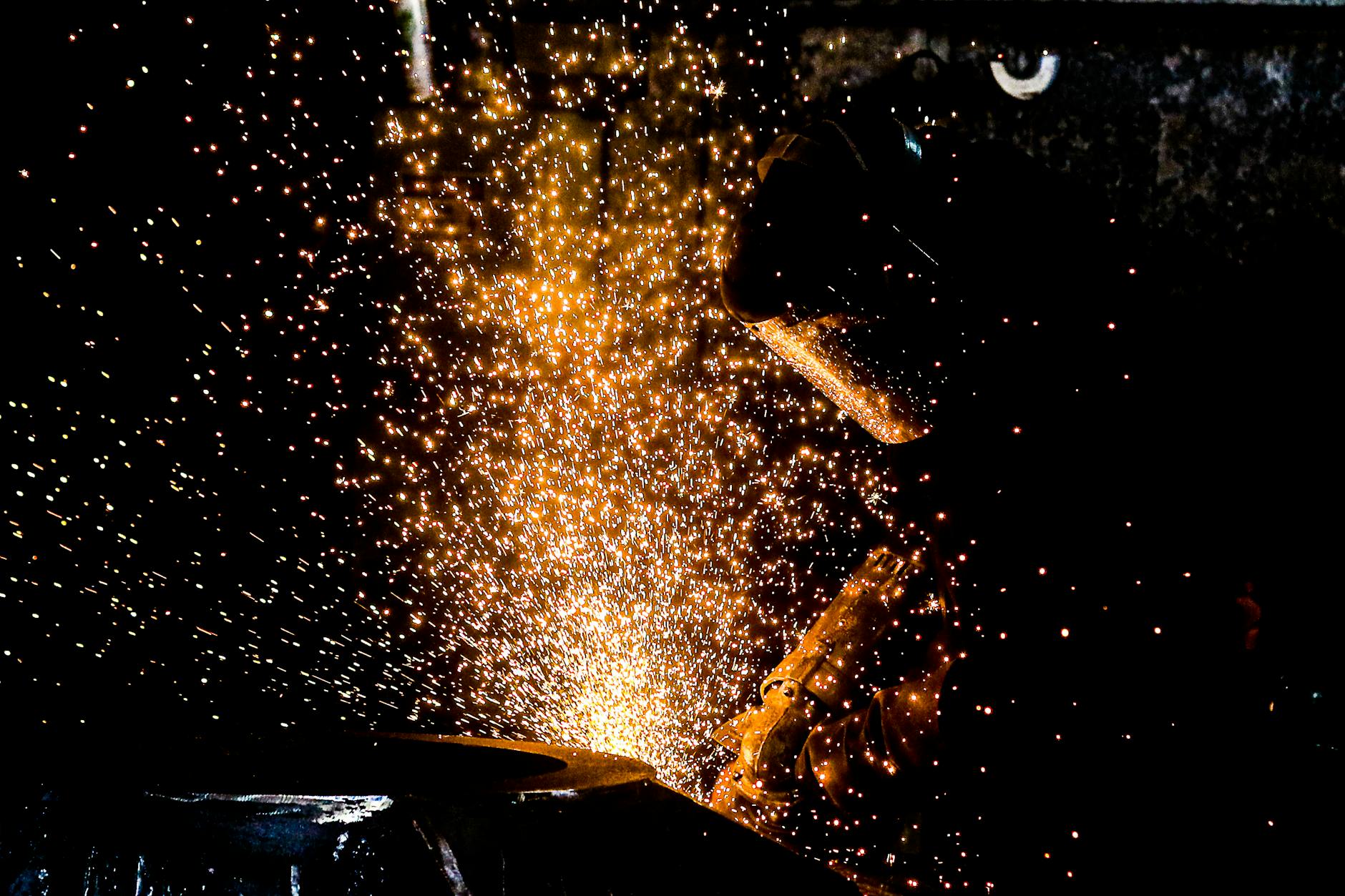
Ines runs a plastics extrusion plant on an industrial estate outside Peterborough. Last year her team spent four months getting a recycled-content blend to run without cracking, and eight weeks fitting a faster die that lifted throughput. Both felt like hard work. Only one of them is research and development for tax purposes.
Four questions separate them. Apply all four to a single project, in order, and answer honestly. A no at any point ends it, and on a factory floor most projects end at question one or question four.
Question One: Was the Outcome Genuinely Uncertain to a Competent Engineer?
Not uncertain to you. Uncertain to a competent professional working in your field, holding the knowledge that is publicly available in it.
That is a harder test than it sounds, because engineers are used to describing anything unfinished as uncertain. The question is whether the outcome could have been predicted. If an experienced process engineer, given your constraints and the published literature, would have known which approach would work and roughly what result it would produce, there was no technological uncertainty. Difficulty is not uncertainty. Cost is not uncertainty. A tight deadline is not uncertainty.
Genuine technological uncertainty on a production line usually looks like an absence of data: a material with no published processing window at the temperature you need, an interaction between two process steps that nobody has characterised, a tolerance nobody in the sector has held on that geometry. If you can point at what was not known and by whom, you are on solid ground. If the honest answer is "we knew it would work, we just had to do it", stop here.
Question Two: Is the Advance in Science or Technology, or Only in Your Own Business?
The advance has to be in the field, meaning the state of knowledge or capability that competent professionals in your sector share. An improvement that only moves your business forward is a commercial gain, and commercial gain is not what the relief is for.
This is where the majority of manufacturing projects that pass question one still fail. Catching up with what your competitors already do is not an advance. Bringing in-house a process that specialist subcontractors have run for a decade is not an advance. Being first in your sector to buy a machine is not an advance, and neither is being first to sell the resulting product. Aesthetics, packaging, branding and market fit sit outside the definition entirely, and so does work whose only novelty is that it is new to you.
A useful phrasing: could you write two sentences explaining what competent professionals in your field could not do before, and what they can do now? If those two sentences only describe your own factory, the answer to question two is no.
Question Three: Was the Work Systematic?
Relief attaches to work that sought to resolve the uncertainty, not to the fact that the uncertainty existed. That means a structured attempt: a hypothesis about what might work, trials designed to test it, results recorded, and the next trial informed by the last.
Trial and error qualifies when it is systematic. Changing one variable at a time across a planned matrix is systematic. Twisting dials until the parts stop failing and then moving on is not, and it also leaves nothing behind to demonstrate later. The work does not need a project file, a stage-gate process or a named research team. It needs to have been done deliberately, and it needs some contemporaneous trace, which on most sites already exists in production logs, quality reports and dated emails between engineers.
Question Four: Was the Answer Available by Reading, Buying or Asking?
Run this last, because it is the one that reopens a project you had already talked yourself into.
If the solution was in a datasheet, a published standard, a trade journal, a supplier's application note, a machine manufacturer's manual, or the head of a consultant you could have hired, then it was deducible from existing knowledge and there was no uncertainty to resolve. The relief does not follow effort spent rediscovering something. It follows work that had to happen because the knowledge was not there to be had.
Ask the supplier before you decide. It is an uncomfortable call to make and it is the cheapest possible way to find out that a project does not qualify.
Free R&D tax credits tool
Estimate your R&D tax credit claim
Our interactive tool is designed for a larger screen. Leave your details and a specialist will send your figure and the next sensible step, with no obligation.
Estimate your R&D tax credit claim
Skip the spreadsheet. Tell us about your situation and a specialist will review your position and the next sensible step, with no obligation.
Two Peterborough Line Changes: One Fails, One Passes
The die replacement fails. Ines fitted a new die profile recommended by the tooling supplier, ran it at the supplier's stated pressure and temperature range, and lifted throughput by roughly 8%. Question one: the supplier predicted the outcome, so there was no uncertainty. Question four confirms it, because the answer arrived in an application note. The eight weeks of work were real and the throughput gain is real. Neither makes it research and development. This is ordinary production improvement, and it is where most factory projects land.
The recycled blend passes, on its facts. A customer specified a minimum recycled content that no published processing window covered for that polymer family at the wall thickness required. Parts cracked at the weld line under conditions the material data did not explain. The supplier confirmed it had no parameters to offer. Over four months the team ran a planned series of trials across melt temperature, screw speed and cooling profile, recorded each run, and characterised the interaction that was causing the failure. Question one passes because nobody knew whether it could be run at all. Question two passes because the capability now exists in the field rather than only in the plant. Question three passes because the trials were designed and logged. Question four passes because there was nothing to read or buy.
Note how narrow the passing case is. That is not caution for its own sake. The definition is genuinely narrow, and any page implying that a typical factory year contains several qualifying projects is describing a different test from the one HMRC applies.
What the Test Rules Out
Stated plainly, because a page that never says no to anything is not an eligibility test:
- Retuning a line to parameters the equipment maker publishes.
- Replacing worn tooling, bearings or dies with better ones off the shelf.
- Scaling up a process you already know works, at a bigger volume.
- Meeting a standard, certification or customer specification that others in your sector already meet routinely.
- Improving appearance, finish quality or packaging without a technological problem underneath.
- Cost reduction achieved by buying differently, negotiating differently or reorganising labour.
- Routine quality control, calibration and inspection.
- Software configuration where the vendor supports the configuration you used.
Any of these can consume a year of engineering time and still sit outside the relief entirely.
What a Passing Project Is Worth
For accounting periods beginning on or after 1 April 2024, one merged scheme applies to companies of all sizes. It gives a Research and Development Expenditure Credit, usually shortened to RDEC, at 20% of qualifying expenditure. The credit is taxable income, which is why the headline rate and the money that reaches you are different numbers.
Take the recycled blend project. Suppose the qualifying spend across the four months came to £86,000 of staff cost (salary, employer National Insurance contributions and pension for the time actually spent on the trials) plus £34,000 of material consumed in testing and scrapped. That is £120,000 of qualifying expenditure.
- Expenditure credit: £120,000 × 20% = £24,000.
- The credit is taxed. At the corporation tax main rate of 25%: £24,000 × 25% = £6,000, leaving £18,000, which is 15% of the qualifying spend.
- At the small profits rate of 19%: £24,000 × 19% = £4,560, leaving £19,440, which is 16.2% of the qualifying spend.
- In the £50,000 to £250,000 marginal relief band the effective rate is 26.5%: £24,000 × 26.5% = £6,360, leaving £17,640, which is 14.7% of the qualifying spend.
The 25% main rate and the 19% small profits rate have applied since 1 April 2023 and were still current when this page was checked in August 2026. Whether the net amount reduces a corporation tax bill or is paid over in cash depends on the company's position and the order in which the credit is set against liabilities.
A separate route exists for loss-making companies that spend heavily on research: Enhanced R&D Intensive Support, or ERIS, where qualifying expenditure is at least 30% of total relevant expenditure. It runs from the same start date, accounting periods beginning on or after 1 April 2024. It is a different calculation from the one above and does not change any of the four eligibility questions.
Capital equipment does not enter this arithmetic. The extruder itself is plant and machinery, dealt with through capital allowances, not through research and development relief.
Where This Page Stops
Everything above is about whether a project qualifies. Nothing above is about how a claim is made, what forms exist, when they are due or what HMRC asks for. Those are separate questions and they only matter once the answer here is yes.
Our companion page on what an R&D claim actually involves for a manufacturing company covers the forms, the deadlines and the evidence, and says who does the work. If you are searching for R&D tax credits for manufacturers and want the mechanics rather than the eligibility rule, start there instead.
Holloway Davies does not prepare or process research and development claims and does not act as a claim agent. What we do is ordinary company accounting and corporation tax work, which includes telling you when a project you were told to claim for does not meet the definition. If you want a second reading of your corporation tax position, get in touch. Related reading: invoice finance for manufacturing and selling a manufacturing business.