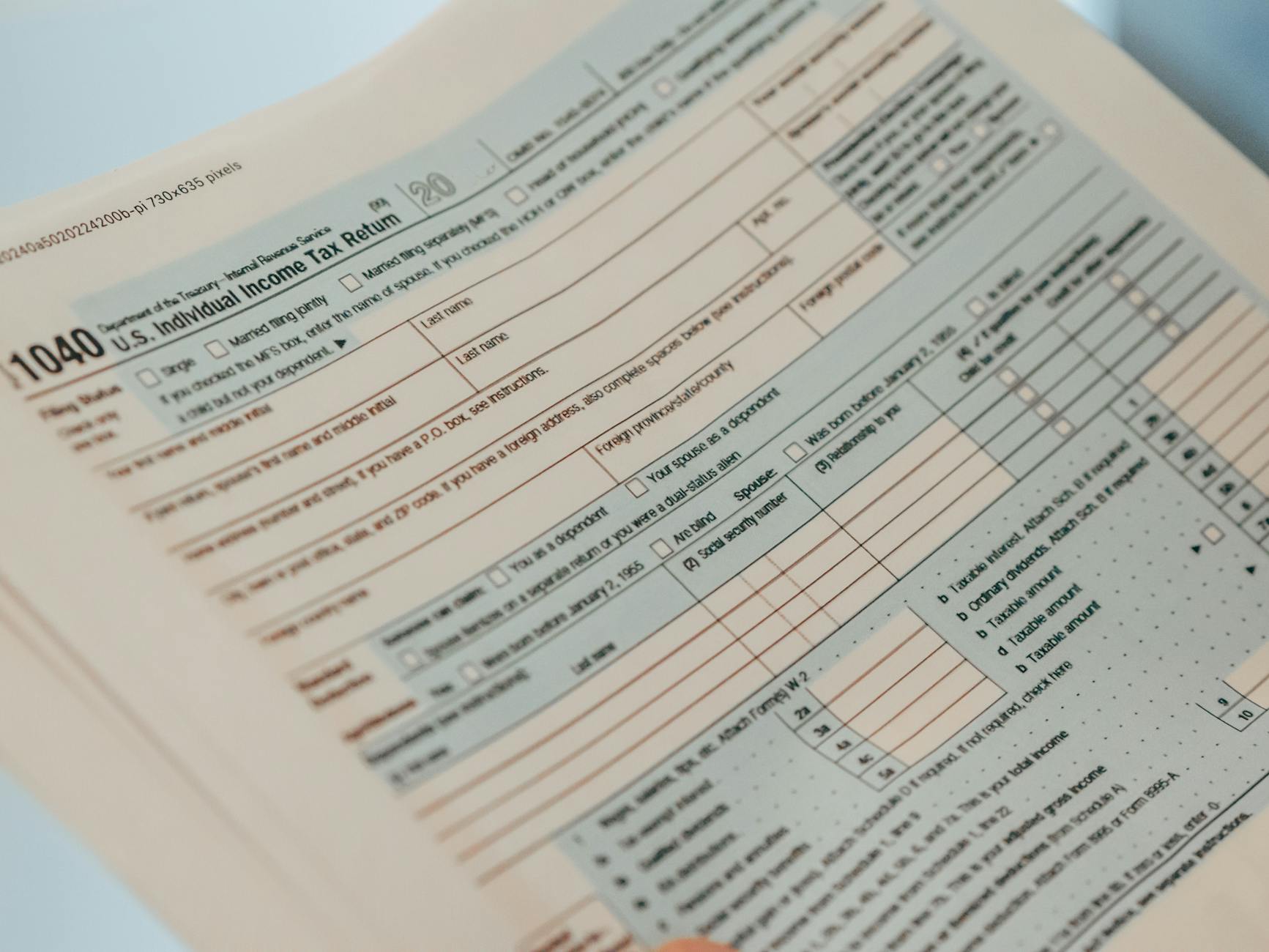
If your business has spent time and money developing a new product, process, or software, you might be sitting on a valuable tax relief without realising it. R&D tax credits are one of the most generous reliefs HMRC offers, yet thousands of eligible UK businesses never claim because the process feels complicated or they assume their work doesn't count.
This guide covers exactly how to claim R&D tax credits for your UK business. We'll walk through what qualifies, what costs you can include, how the claim process works, and the mistakes that get claims rejected. If you are a limited company director or a contractor running your own Ltd doing genuine development work, this applies to you. (R&D tax credits are a corporation tax relief: sole traders and partnerships cannot claim, whatever the nature of their work.)
What Are R&D Tax Credits?
R&D tax credits are a corporation tax relief for companies that invest in research and development. They reduce your taxable profits (or generate a cash payment if you are loss-making). The scheme has existed in various forms since 2000, and HMRC paid out over £7 billion in claims in 2022/23.
There are two main schemes. For accounting periods starting on or after 1 April 2024, the old separate SME and RDEC schemes were merged into a single RDEC-like scheme for most companies. The exception is the R&D Intensive Scheme (ERIS), which remains available for loss-making SMEs whose qualifying R&D spend exceeds 30% of total costs.
For periods before April 2024, the SME scheme offered a 186% enhanced deduction (230% pre-April 2023) and the RDEC scheme offered a 13% taxable credit. The new merged scheme provides a 20% taxable credit (before tax) for most companies, with a higher 27% credit for intensive SMEs.
Does Your Business Qualify for R&D Tax Credits?
Many business owners assume R&D means white coats and laboratories. It does not. HMRC defines R&D for tax purposes as a project that seeks to achieve an advance in science or technology. That advance can be in your field, not the whole world. If you solved a technical problem that other competent professionals in your industry could not solve without further research, you likely have a valid claim.
Common qualifying sectors include:
- Software and technology: Building new algorithms, developing new platforms, solving data processing challenges.
- Manufacturing and engineering: Designing new production methods, improving material performance, developing prototypes.
- Construction and materials: Developing new building techniques, testing novel materials, improving structural performance.
- Food and drink: Creating new recipes with extended shelf life, developing novel production processes.
- Creative and media: Developing new rendering techniques, animation tools, or broadcast technologies (not artistic work itself).
- Life sciences and healthcare: Developing medical devices, diagnostic tools, or treatment methods.
A 4-employee software consultancy in Manchester turning over £420,000 that spent 6 months building a new machine learning model for image recognition qualifies. A sole trader carpenter who spent weeks figuring out how to join two materials that had never been joined before is doing work that is R&D in nature, but cannot claim: R&D tax credits are a corporation tax relief and only limited companies can access them (incorporating would be the route to unlock that). A digital marketing agency that just used standard tools to create a website does not qualify, regardless of legal structure.
What Costs Can You Claim For?
You can claim for specific categories of qualifying expenditure. These are the costs HMRC will accept, provided they relate directly to your R&D project.
Staff Costs
Salaries, wages, employer's National Insurance, and employer pension contributions for staff directly engaged in R&D. This includes directors who spend time on development work. You cannot claim for administrative or sales staff unless they are directly supporting the R&D activity.
For a limited company with two director-shareholders spending 60% of their time on R&D, you would apportion 60% of their salary and related employer costs to the claim.
Consumables and Materials
Items that are consumed or transformed in the R&D process. Raw materials, prototypes, test components, chemicals, software licenses used directly in development. You cannot claim for capital equipment (you claim capital allowances instead) or for items used in non-R&D activities.
Externally Provided Workers
Agency staff or subcontractors working on your R&D project under your direction. The rules changed from April 2024. Most externally provided workers are now treated as contracted out R&D, with a 65% cap on qualifying costs (up from the previous treatment).
Subcontracted R&D
If you pay another company to carry out R&D on your behalf, the costs can qualify. But the rules differ depending on whether you are the SME or the larger company. Under the merged scheme, most subcontractor costs are capped at 65% of the payment.
Software and Data Licences
Cloud computing costs, software licenses used directly for R&D, and costs of obtaining data for research purposes. This is a relatively new category (added for periods from April 2023) and is increasingly relevant for tech businesses.
How to Claim R&D Tax Credits: The Process Step by Step
Here is the practical process for submitting a valid R&D tax credit claim. Follow these steps and you will avoid the most common rejection triggers.
Step 1: Identify Your Qualifying Projects
Go through your financial year and identify every project where you attempted to resolve scientific or technological uncertainty. Write down the problem, the work done, the people involved, and the costs. Do this for each project separately.
One project might be "developing a new composite material for lightweight structural panels". Another might be "building a custom CRM platform that processes 10x the data volume of existing solutions". Be specific.
Step 2: Calculate Your Qualifying Costs
Pull the actual costs from your accounting records. Use timesheets, payroll reports, purchase invoices, and software subscription records. HMRC expects accurate figures, not estimates. If you cannot find exact records, make reasonable apportionments and document your methodology.
For a typical software company, staff costs often make up 70-80% of the claim. For a manufacturer, consumables and materials may dominate. Get the numbers right.
Step 3: Prepare Your Technical Report
This is the most important part of the claim. HMRC wants to see a clear narrative of the scientific or technological advance you were seeking, the uncertainties you faced, and how you overcame them. Write this in plain English. Avoid buzzwords. Focus on the technical problem and the work done.
A good technical report answers three questions:
- What was the baseline (what existed before your project)?
- What advance were you trying to achieve?
- Why was it not readily deducible by a competent professional in your field?
If you are a small business without in-house technical writers, our experienced team at Holloway Davies can help structure this narrative. See our R&D tax credits page for more detail.
Step 4: Prepare Your Financial Summary
This is a breakdown of qualifying costs by category, linked to the technical report. HMRC will check that the costs match the narrative. If you claim £50,000 in staff costs for a project that involved one person working 2 days a week, expect questions.
Step 5: Submit the Claim with Your Corporation Tax Return
R&D tax credits are claimed through your company tax return (CT600). You include the qualifying costs in the relevant box, and HMRC processes the claim as part of your return. For the merged scheme (post-April 2024), you also need to submit the Additional Information Form (R&D AIF) before you file the return.
The R&D AIF must be submitted within 12 months of your accounting period end. If you file your corporation tax return without the AIF, HMRC will reject the claim. This is a common trap for first-time claimants.
Step 6: Respond to HMRC Enquiries
HMRC reviews R&D claims more closely than they used to. Expect questions, especially if your claim is large relative to your turnover or if it is your first claim. They may ask for supporting evidence: timesheets, project notes, emails, design documents. Keep everything organised.
If HMRC opens an enquiry, respond promptly and fully. Delays can trigger further scrutiny or rejection.
Free R&D tax credits tool
Estimate your R&D tax credit claim
Our interactive tool is designed for a larger screen. Leave your details and a specialist will send your figure and the next sensible step, with no obligation.
Estimate your R&D tax credit claim
Skip the spreadsheet. Tell us about your situation and a specialist will review your position and the next sensible step, with no obligation.
Common Mistakes That Kill R&D Claims
These are the errors we see most often when businesses try to claim R&D tax credits without professional support.
Claiming for Non-Qualifying Activities
Routine improvements, cosmetic changes, and standard commercial development do not qualify. If you upgraded your website from WordPress to a custom theme using standard tools, that is not R&D. If you built a new content management system from scratch that solved a novel technical problem, that might be.
Poor Technical Narrative
HMRC receives thousands of claims with technical reports that say "we developed new software to improve efficiency". That tells them nothing. They want to know what was technically uncertain, what you tried, what failed, and what succeeded. Vague narratives get rejected.
Missing the R&D AIF Deadline
From April 2024, the Additional Information Form is mandatory. File it late and your claim is invalid. The deadline is 12 months from the end of your accounting period. Mark it in your calendar.
Claiming Costs That Are Not Qualifying
Capital equipment, rent, marketing costs, and general overheads are not qualifying expenditure. Only the specific categories listed above count. Including non-qualifying costs can trigger a full enquiry into your entire claim.
Not Keeping Records
HMRC can ask for evidence up to 6 years after the claim. If you cannot produce timesheets, invoices, or project notes, they may withdraw the relief and charge interest and penalties. Keep everything.
How Much Could You Claim?
The amount depends on your scheme, your profitability, and your qualifying costs. Here are two worked examples for the post-April 2024 rules.
Example 1: Profitable company, merged scheme
A Manchester software consultancy has £420,000 turnover and £80,000 qualifying R&D costs. Under the merged scheme, they receive a 20% taxable credit. That is £16,000 credit, which reduces their corporation tax bill. After tax at 25%, the net benefit is roughly £12,000.
Example 2: Loss-making intensive SME, ERIS scheme
A Bristol biotech startup spends £150,000 on R&D and has £350,000 total costs (R&D is 42.8% of total, above the 30% threshold). They are loss-making. Under the ERIS scheme, they can surrender losses for a cash repayment at 27% of the qualifying R&D spend. That is £40,500 cash in hand.
These are illustrative. Your actual benefit depends on your specific circumstances. Use our R&D tax credit calculator for a rough estimate.
Do You Need an Accountant to Claim R&D Tax Credits?
You can submit a claim yourself, but the process has become significantly more complex since April 2024. The mandatory R&D AIF, the merged scheme rules, and HMRC's increased scrutiny mean that poorly prepared claims are more likely to be rejected or trigger lengthy enquiries.
An experienced accountant who specialises in R&D claims can:
- Identify qualifying projects you might have overlooked
- Structure your technical narrative to meet HMRC's expectations
- Calculate qualifying costs accurately
- Submit the R&D AIF on time
- Handle HMRC enquiries if they arise
We handle R&D claims for businesses across every sector. If your turnover is above £100,000 and you are doing genuine development work, it is almost certainly worth a conversation. Contact us to discuss your claim.
Key Deadlines to Remember
- R&D AIF submission: Within 12 months of your accounting period end. Mandatory from April 2024.
- Corporation tax return (CT600): Due 12 months after your accounting period end.
- Corporation tax payment: Due 9 months and 1 day after your accounting period end (for small companies).
- HMRC enquiry window: HMRC can open an enquiry up to 12 months after you file your return. Keep records for at least 6 years.
Final Thoughts
R&D tax credits are not a niche relief for university spinouts and pharmaceutical giants. They are a practical, cash-generating relief for any UK business that invests in genuine technical development. If you have spent time and money solving a technical problem that others in your field could not solve, you should claim.
The process is more rigorous than it was five years ago. HMRC expects proper documentation, accurate costs, and a clear technical narrative. But the reward is worth the effort. A well-prepared claim can put thousands of pounds back into your business, money you can reinvest in the next project.
If your business is doing genuine development work and you have not claimed before, start by reviewing your last two financial years. Identify the projects. Gather the costs. Write the narrative. Then submit the claim with the R&D AIF before the deadline.
And if you want professional support, our team at Holloway Davies is here to help. We handle the technical and financial side so you can focus on building your business. Visit our services page to learn more.