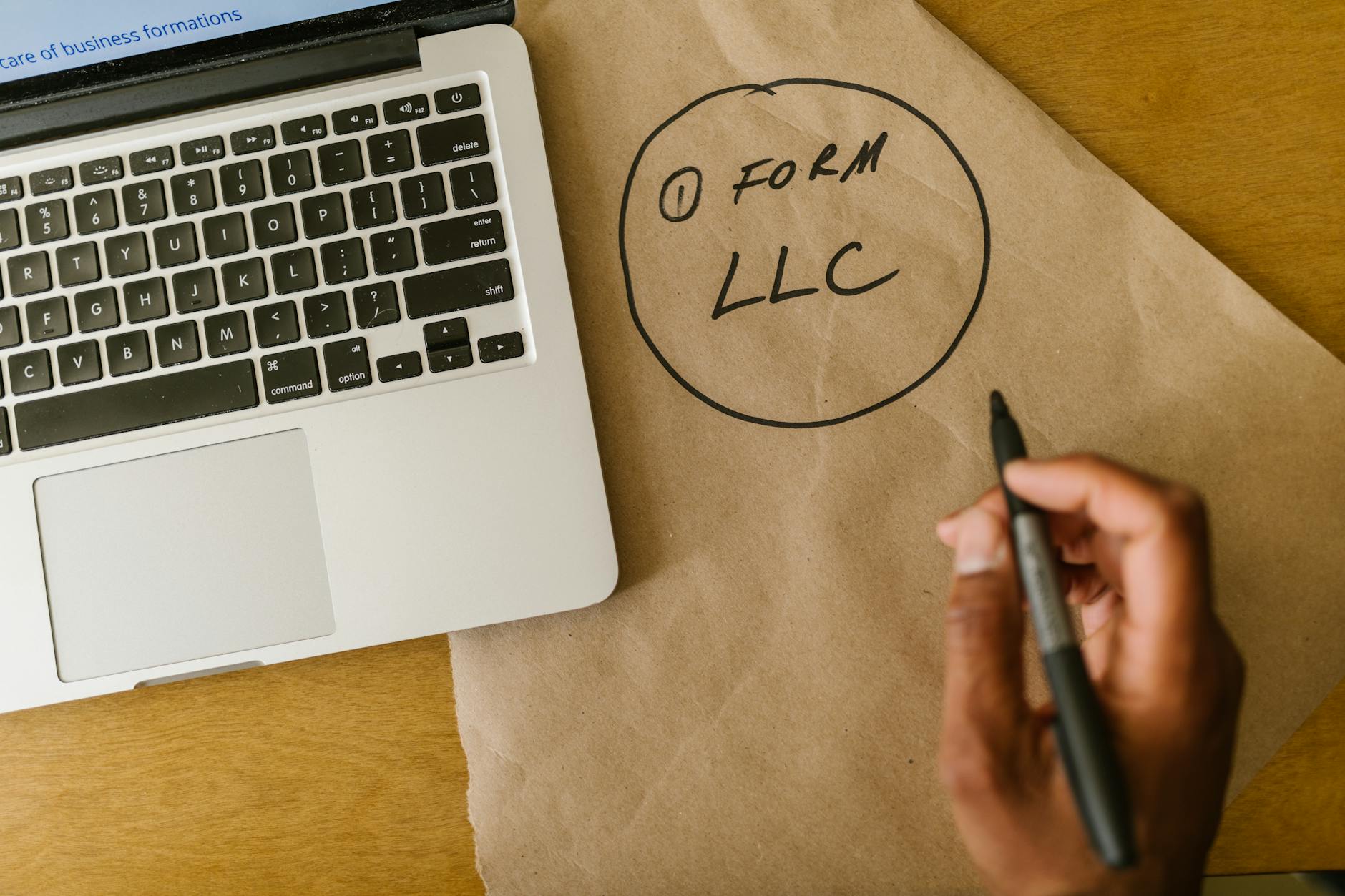
If you are starting a new limited company in the UK, the registration process itself takes about 30 minutes and costs £50. But if your chosen name is too similar to an existing trademark or registered company name, you could face rejection from Companies House or, worse, a legal challenge later. This guide covers exactly how to register a limited company UK with a name that is protected or contested.
We work with business owners across every sector, from a freelance consultant in Shoreditch to a husband-and-wife Ltd company running a Birmingham café. We have seen the problems that arise when company names clash. This guide will help you avoid them.
Why Your Company Name Matters
Your company name is your brand. It is how customers find you, how suppliers recognise you, and how HMRC identifies you for corporation tax and VAT. If you register a name that is too similar to an existing business, you risk:
- Rejection by Companies House at the point of registration
- A formal objection from the existing business, which can lead to a direction to change the name
- A trademark infringement claim, which can be costly and time-consuming
- Damage to your reputation if customers confuse you with another business
The Companies Act 2006 gives the Secretary of State the power to direct a company to change its name if it is the same as or too similar to an existing name on the register. This is not just about exact matches. If your name is confusingly similar, you can be forced to rebrand.
Step 1: Check Companies House for Existing Names
Before you even think about registering, check the Companies House register. Go to the Companies House service and search for your proposed name. You need to check:
- Exact matches: you cannot register a name that is exactly the same as an existing company
- "Same as" matches: Companies House uses rules to determine if names are effectively identical. For example, "ABC Consulting Ltd" is the same as "ABC Consulting Limited". "ABC Consultancy Ltd" is different but may still be too similar
- Names that are phonetically similar: "Kwik Fix Ltd" and "Quick Fix Ltd" are likely to be considered too similar
Companies House will reject your application if your name is the same as an existing name on the index. They will also reject it if it is too similar, but the rules here are less strict. The key test is whether the name is likely to cause confusion.
Step 2: Search the UK Trademark Database
Companies House only checks against the company names index. It does not check against the UK trademark register. This is a common trap. You can register a company name that is identical to an existing trademark, and Companies House will approve it. But the trademark owner can then object.
Search the UK Intellectual Property Office (IPO) trademark database. Search for:
- Your exact proposed name
- Variations of your name (e.g., if you want "Smith's Bakery Ltd", search for "Smiths Bakery" and "Smith Bakery")
- Names that cover the same goods or services you will provide
Trademarks are registered in classes. A trademark for "Smith's Bakery" in Class 30 (bread, pastries) would stop you from using that name for a bakery. But it would not stop you from using it for a plumbing business. Check the classes that apply to your business.
Step 3: Understand What "Too Similar" Means
Companies House uses a set of rules to determine if a name is too similar. These are not always intuitive. Here are the key principles:
- Punctuation and spacing are ignored: "A B C Ltd" is the same as "ABC Ltd"
- Certain words are interchangeable: "and" and "&", "UK" and "United Kingdom", "Ltd" and "Limited"
- Plurals and possessive forms: "Smith's Bakery Ltd" and "Smiths Bakery Ltd" are likely to be considered the same
- Phonetic similarity: "Kwik Fix" and "Quick Fix" are likely to be considered too similar
If your name is flagged as too similar, Companies House will reject it. You can appeal, but it is easier to choose a different name. If your name is not flagged but is still similar to an existing business, you may still face a challenge later.
Step 4: Consider Using a Different Name
If your preferred name is already taken or too similar to an existing trademark, the simplest solution is to choose a different name. Do not try to register a name that is clearly similar and hope it goes unnoticed. The risk of a legal challenge is real, and the cost of rebranding is significant.
Consider adding a word that distinguishes you. For example, if "Smith's Bakery Ltd" is taken, try "Smith's Artisan Bakery Ltd" or "Smith's Bakery of Bristol Ltd". Adding a location, a descriptor, or a unique word can make the name sufficiently different.
You can also use a slightly different spelling or word order. "Bakery by Smith Ltd" is different from "Smith's Bakery Ltd". But be careful: if the name is still phonetically or visually similar, you may still face problems.
Free Incorporation and structure tool
See what you could save by incorporating
Our interactive tool is designed for a larger screen. Leave your details and a specialist will send your figure and the next sensible step, with no obligation.
See what you could save by incorporating
Skip the spreadsheet. Tell us about your situation and a specialist will review your position and the next sensible step, with no obligation.
Step 5: Register Your Company
Once you have a name that is clear, you can register your company. The process is done through Companies House. You will need:
- A proposed company name (that passes the checks above)
- A registered office address in the UK
- At least one director and one shareholder (they can be the same person)
- A statement of capital (the number and value of shares)
- Standard Industrial Classification (SIC) code for your business activity
The registration fee is £50 online. You can pay by debit or credit card. The process takes around 24 hours for standard applications, or a few hours for same-day service (which costs more).
You will receive a certificate of incorporation. This is your company's legal birth certificate. It confirms your company number, date of incorporation, and registered name.
Step 6: What to Do If Your Name Is Challenged
If an existing business challenges your company name after you have registered, you have options. The challenge can come from:
- Companies House: if they decide your name is too similar to an existing name, they can direct you to change it
- A trademark owner: if they believe your name infringes their trademark, they can take legal action
- A business that has goodwill in the name: under the law of "passing off", they can claim that your name is confusing customers
If you receive a direction from Companies House, you have 12 months to change your name. You can appeal if you believe the name is not too similar. But in most cases, it is easier to change the name.
If a trademark owner challenges you, the first step is usually a letter before action. You should take this seriously. Ignoring it can lead to court proceedings, which can be expensive. Your options include:
- Changing your name voluntarily
- Negotiating a coexistence agreement (where both businesses use similar names in different markets)
- Defending your name if you believe there is no infringement
We recommend speaking to a solicitor who specialises in intellectual property if you face a challenge. The cost of legal advice is often less than the cost of defending a claim without it.
Practical Example: A Bristol Software Consultancy
Consider a real scenario. A software consultancy in Bristol wanted to register as "Bristol Tech Solutions Ltd". They searched Companies House and found no exact match. They registered the company.
Six months later, they received a letter from a solicitor representing "Bristol Tech Solutions" (a sole trader who had been trading under that name for five years). The sole trader had built up goodwill in the name and could prove that customers were confusing the two businesses.
The consultancy faced a choice: change their name or defend a passing-off claim. They chose to change their name to "Bristol Software Consulting Ltd". The rebranding cost them around £2,000 in new stationery, website updates, and lost business during the transition.
If they had searched the trademark database and the wider market before registering, they could have avoided this cost entirely.
How We Can Help
At Holloway Davies, we help business owners through every stage of incorporation. We can review your proposed company name, check for potential conflicts, and guide you through the registration process.
If you are unsure about your company name or need help with the registration process, get in touch. We can also help with the wider setup, including opening a business bank account, setting up payroll, and registering for VAT.
Key Takeaways
- Check Companies House and the UK trademark database before you register
- Understand that "too similar" includes phonetic and visual similarity, not just exact matches
- If your name is challenged, act quickly. Ignoring it makes the problem worse
- Choosing a distinct name from the start is cheaper than rebranding later
- We can help you through the entire incorporation process
Registering a limited company is straightforward. But the name you choose is permanent unless you change it. Take the time to get it right. Your future self will thank you.